


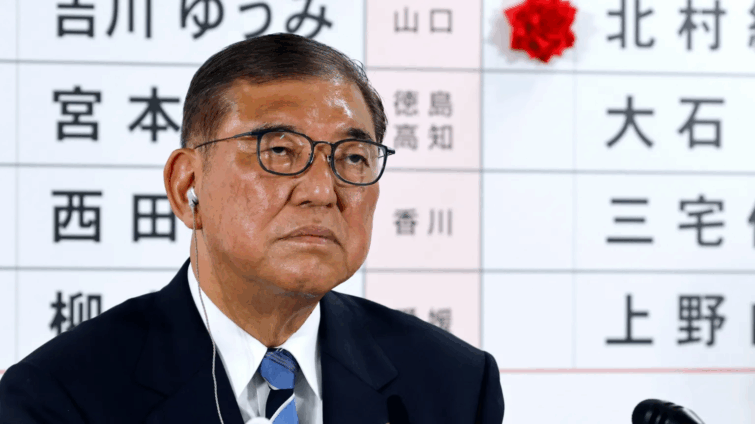

Japan’s Prime Minister vows to stay in power after election defeat
A Sobering Night for the Ruling Coalition
In a night of political reckoning, Japan’s Prime Minister Shigeru Ishiba faced the press with calm resolve despite a stinging electoral blow. His ruling coalition—comprising the long-dominant Liberal Democratic Party (LDP) and junior partner Komeito—lost its majority in the upper house of parliament following Sunday’s closely watched vote.
The coalition secured just 47 seats, falling short of the 50 needed to maintain control of the 248-seat chamber. While the results weren’t unexpected, they marked a significant political setback for Ishiba, whose leadership is increasingly being questioned both within and outside his party.
“I solemnly accept the harsh result,” Ishiba said at LDP headquarters, surrounded by flashing cameras and tight-lipped aides. “But my mission is not yet complete. My focus remains on navigating Japan through difficult trade negotiations.”
Frustrations at the Ballot Box
The election unfolded against a backdrop of economic anxiety and growing discontent. Voters expressed their frustration over soaring prices—especially for staples like rice—alongside lingering anger about political scandals that have dented public trust in the LDP.
Adding to the government’s woes are escalating tensions over trade with the United States, as well as Japan’s slow progress in addressing the cost-of-living crisis. These issues converged to create a perfect storm for the LDP and Komeito, which have governed Japan for most of the post-war era.
Right-Wing Rivals Gain Ground
One of the most notable developments in this election was the rise of the fringe-right Sanseito party. Led by Sohei Kamiya, a controversial figure often compared to Donald Trump for his populist tone, the party captured 14 seats—a dramatic leap from the single seat it held previously.
Sanseito’s platform, built around anti-immigration rhetoric, “Japanese First” nationalism, and a heavy dose of conspiracy theory-laden messaging, found traction with conservative voters disillusioned with the LDP. The party also capitalized on fears around Japan’s rising foreign population, tying immigration to crime and economic strain.
Jeffrey Hall, a Japanese Studies lecturer at Kanda University, noted that many LDP supporters view Ishiba as “not conservative enough,” especially when compared to former Prime Minister Shinzo Abe. “They think he lacks the nationalistic views on history and the hardline stance on China that Abe had,” Hall said.
A Party in Peril, But a Leader Unyielding
Historically, losing an upper house majority has signaled the end of the road for LDP prime ministers. The last three to suffer such a defeat stepped down within two months. Analysts expected Ishiba might follow suit—but, at least for now, he’s staying put.
Behind the scenes, jockeying for power has likely already begun. Figures such as Sanae Takaichi, who challenged Ishiba in the last LDP leadership race, and former economic security minister Takayuki Kobayashi are seen as potential successors. Shinjiro Koizumi, the son of former Prime Minister Junichiro Koizumi, is another name to watch.
A leadership challenge could trigger a period of intense political drama and instability, just as Japan enters a critical phase in its economic and foreign policy strategy.
Ishiba’s Response to Rising Nationalist Pressure
In what appeared to be an attempt to appease conservative critics, Ishiba recently announced a new task force aimed at addressing “crimes or nuisance behaviours committed by some foreign nationals.” The group will reportedly focus on issues ranging from immigration violations to land acquisitions and unpaid insurance.
Critics see this move as a politically calculated effort to stem the erosion of support to Sanseito and other nationalist factions. However, it also underscores the increasing role immigration and identity politics are playing in shaping Japan’s political landscape.
The Road Ahead: Uncertain but Pivotal
Monday’s public holiday kept the Tokyo Stock Exchange closed, but global markets reacted calmly. The yen even gained slightly, suggesting that investors had anticipated the outcome and do not yet see a threat to long-term policy stability.
Yet beneath that market calm lies a brewing political storm. With voter confidence shaken, party unity frayed, and right-wing populism rising, Shigeru Ishiba faces the biggest challenge of his political career.
Whether he can survive the mounting pressure from within his party, mend a fractured coalition, and restore public trust remains to be seen. But for now, the prime minister is staying the course—defiant, wounded, and deeply aware that Japan’s political future hangs in the balance.


DONATION TO SUPPORT THIS WEBSITE: 0599896099 +233599896099 Thank you for your contribution!


