



AG sued over OSP’s prosecutorial powers
Citizen drags Attorney-General to Supreme Court
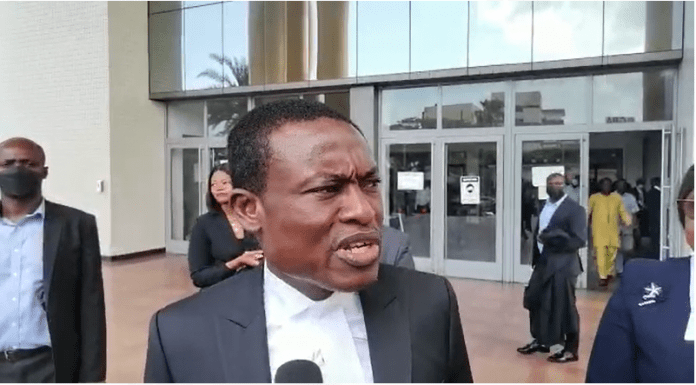
Deputy Attorney-General, Dr. Justice Srem-Sai, has confirmed that a private citizen has filed a lawsuit against the Attorney-General, challenging the independence and prosecutorial authority of the Office of the Special Prosecutor (OSP).
In a Facebook post on Tuesday, December 10, Dr. Srem-Sai disclosed that the suit—lodged by Noah E. Tetteh—questions the legality of granting autonomous prosecutorial powers to the OSP.
Details of the legal tussle
According to Dr. Srem-Sai, the case, filed under Supreme Court suit number J1/3/2026, argues that Parliament exceeded its constitutional mandate when it created a prosecutorial body that operates independently of the Attorney-General.
The plaintiff contends that Article 88 of the 1992 Constitution vests all prosecutorial authority solely in the Attorney-General, leaving no room for an independent prosecutorial entity.
Tetteh is therefore asking the Supreme Court to strike out sections of the Office of the Special Prosecutor Act, 2017 (Act 959) that grant the OSP power to prosecute cases without the supervision or approval of the Attorney-General.
Requested reliefs
Dr. Srem-Sai explained that the relief sought includes:
- “An order to strike down the provisions of Act 959 that confer autonomous prosecutorial authority on the Office of the Special Prosecutor or insulate it from the Attorney-General’s constitutional control.”
If granted, this ruling would significantly limit, if not completely eliminate, the OSP’s independent mandate.
Parliament’s ongoing review of the OSP Act
The lawsuit coincides with ongoing parliamentary efforts to amend or repeal the very law that established the OSP.
Two Members of Parliament—Mahama Ayariga (Bawku Central) and Rockson-Nelson Dafeamekpor (South Dayi)—have jointly sponsored a private members’ bill seeking a complete repeal of Act 959.
Concerns motivating the proposed repeal
The MPs argue that:
- The OSP has faced overlapping functions with existing state institutions.
- It has suffered operational inefficiencies and institutional friction with the Attorney-General’s office.
- These challenges have slowed down corruption prosecutions and weakened coordination.
- High operational costs have outweighed the office’s impact relative to its resource allocation.
Based on these concerns, Parliament has adopted a policy stance favoring consolidation of anti-corruption prosecutions under a strengthened Attorney-General’s Office, supported by a specialised anti-corruption division.
Potential dissolution of the OSP
If Parliament passes the proposed bill, the OSP will be formally dissolved, and all corruption-related prosecutions will revert to the Attorney-General—aligning with the constitutional provisions governing prosecution in Ghana.
Awaiting Supreme Court hearing date
The Supreme Court has not yet announced a hearing date for the citizen’s suit.
As the legal and legislative processes unfold, the future of the OSP remains uncertain—caught between constitutional interpretation and political reconsideration of its relevance.

DONATION TO SUPPORT THIS WEBSITE: 0599896099 +233599896099 Thank you for your contribution!


