


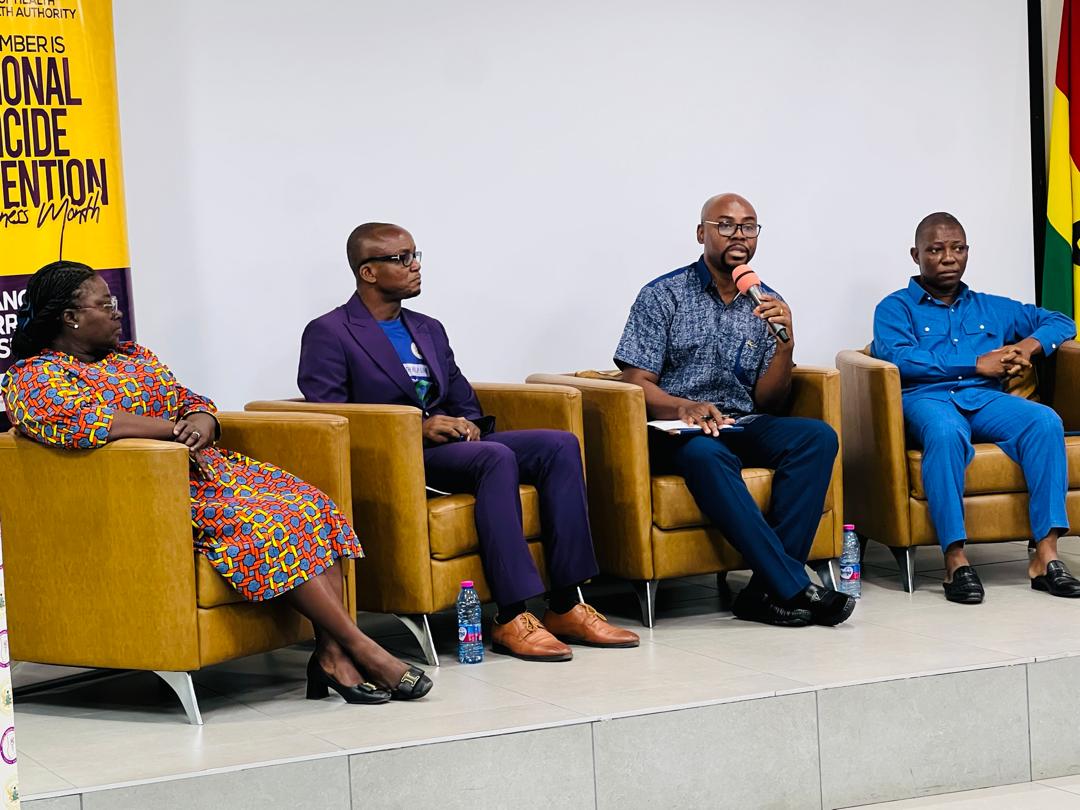

Experts Demand Swift Reforms for Suicide Prevention
The Acting Chief Executive of the Mental Health Authority, Dr. Eugene K. Dordoye, has called on Ghanaians to treat suicide as a public health concern rather than a crime, stressing compassion, awareness, and stronger support systems.
Speaking at the World Suicide Prevention Day 2025 commemoration in Accra, Dr. Dordoye described the 2023 decriminalization of suicide as a “moral milestone” that shifted Ghana’s response from punishment to care.
“For too long, suicide in Ghana was criminalized. Pain was penalized and despair was punished. By decriminalizing suicide, we have moved from judgment to empathy,” he said.
Despite progress, the challenge remains grave. In 2024, Ghana recorded 134 suicide deaths a 40 percent increase from the previous year alongside more than 1,170 attempts. Between January and June 2025 alone, 175 lives were lost, including a police officer just last week.
Dr. Dordoye explained that for every life lost, several others attempt suicide, and each attempt deeply affects up to ten people. “It is shameful and sad that we are losing young people those with the greatest potential to drive Ghana’s development to a preventable cause of death,” he lamented.
Funding Mental Health Through “Sin Taxes”
Dr. Dordoye proposed innovative funding mechanisms for the Mental Health Fund under Act 846, urging government to dedicate excise taxes commonly known as “sin taxes” on products such as alcohol, tobacco, fast food, sugary drinks, and gambling to finance mental health services.
“By funding mental health, we can reduce suicidal behaviour, save lives, and boost productivity for national development,” he said.
Tackling Drug Abuse
He also warned of the strong link between substance abuse and suicide. While depression, bipolar disorder, and schizophrenia are leading causes, he said alcohol and opioids such as tramadol significantly increase risks.
“These substances are central nervous system depressants. Beyond the temporary high, their long-term effect is sadness and depression, which heighten the risk of suicide,” Dr. Dordoye explained.
He called for stronger collaboration with the Ministry of Youth to study drug abuse patterns and design targeted interventions.
Call for Collective Action
Dr. Dordoye appealed to the media for responsible reporting in line with World Health Organization (WHO) guidelines, urging journalists to highlight recovery stories and resources instead of sensationalism.
“Our dedicated helpline remains active. Anyone in distress can call 08-106-78678 to receive professional support,” he reminded.
He closed with a call for unity:
“Let us build a Ghana where no one suffers in silence, where seeking help is met with compassion, and where education and care replace stigma and fear.”
NHIS Coverage for Mental Health – Dr. Obeng
Dr. Kwadwo Marfo Obeng, Director of the Accra Psychiatric Hospital, noted that mental health tariffs will be integrated into the upcoming National Health Insurance Scheme (NHIS) tariff review. Although the process has been delayed, he expressed optimism that services would soon be covered.
“The announcement created awareness and generated enthusiasm. Facilities have been put on notice, and people are ready to access care through the NHIS once available,” he said.
Dr. Obeng also highlighted gaps in suicide data, partly due to historic criminalization, which discouraged accurate reporting. He stressed the need to unlearn old practices so data collection can improve.
He added that NHIS will initially cover four of the most common mental health conditions linked to suicide and revealed that new indicators are being introduced in the District Health Information Management System (DHIMS) to track depression prevalence, much like maternal health statistics.
Education Key to Ending Stigma – Dr. Dickson
Physician and Clinical Psychologist, Dr. Erica D. Dickson, stressed that education is central to combating stigma and misconceptions about suicide.
“The community is not always kind to people who attempt suicide. There are incidents where distressed individuals have been flogged after an attempt. This reflects a lack of knowledge,” she said.
She warned that without mental health literacy, services risk being underutilized. She urged the Mental Health Authority to collaborate with the National Commission for Civic Education (NCCE) and use social media to challenge harmful cultural practices, including discriminatory burial rites.
On the link between drugs and suicidal behaviour, Dr. Dickson described it as “the chicken and the egg,” noting that some self-medicate with cannabis or alcohol, while in other cases the substances directly fuel suicidal risk.
She cautioned that early drug use among young people can harm brain development. “Alcohol is the most abused substance. While some drinkers experience euphoria, others spiral into depression that can trigger self-harm,” she warned.
Source: Isaac Kofi Dzokpo
DONATION TO SUPPORT THIS WEBSITE: 0599896099 +233599896099 Thank you for your contribution!


