

South Africa accepts US Envoy’s credentials
A formal welcome amid strained ties
At the stately Sefako Makgatho Presidential Guest House, ceremony met diplomacy as Cyril Ramaphosa officially received the credentials of the United States’ new ambassador. The occasion, marked by a guard of honour and quiet protocol, symbolized continuity in diplomatic relations—even as tensions between the two nations linger beneath the surface.
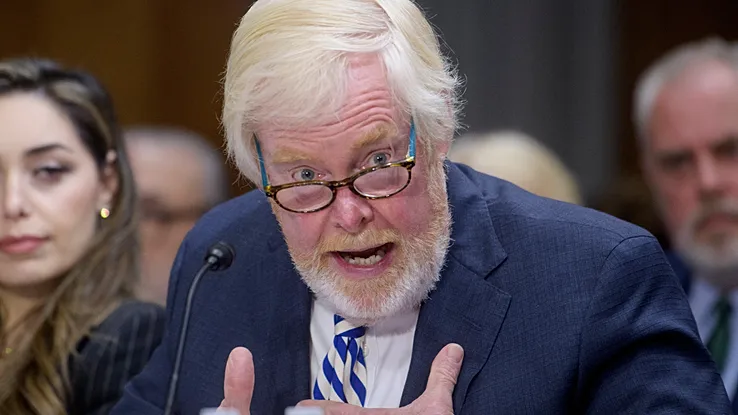
The envoy, Brent Bozell, stood alongside his spouse as he formally assumed his role, stepping into one of the most delicate diplomatic postings between Washington and Pretoria in recent years.
A Rocky Start in Pretoria
Though Bozell took up his post in February, his arrival has been anything but smooth. Known as a staunch supporter of Donald Trump and a vocal media critic, he quickly drew attention—and criticism—for his remarks on South Africa’s racial policies and judicial decisions.
His early statements, particularly on sensitive domestic issues, unsettled diplomatic norms and prompted concern within South African political circles. Yet, at the credential ceremony, his tone shifted noticeably.
“It’s only taken two months… and I can confirm that I’ve fallen in love with the country,” Bozell said, striking a more conciliatory and optimistic note.
A Message of Shared Values
In his address, Bozell emphasized unity and cooperation, framing the relationship between the United States and South Africa as one grounded in mutual interests and shared values.
“We are two nations with great shared values and interests,” he declared, expressing hope that his tenure would elevate bilateral relations to new heights.
His words appeared aimed at resetting the tone after weeks of controversy, signaling a willingness to engage more constructively with his host nation.
Ramaphosa’s Subtle Warning
President Ramaphosa, while welcoming the new envoy, delivered a carefully measured message—one that underscored the expectations placed on foreign diplomats.
Without naming Bozell directly, he stressed the importance of respecting sovereignty and maintaining discretion. Concerns, he noted, should be raised through “quiet, constructive channels” rather than public confrontation.
“It is this approach,” Ramaphosa said, “that builds strong relationships between nations.”
The message was clear: diplomacy requires tact, especially in a country with a complex historical and political landscape.
A Broader Diplomatic Gathering
Bozell was not alone in presenting his credentials that day. Nineteen other envoys also stepped forward, representing countries such as Haiti and Cuba, as well as the partially recognised Sahrawi Arab Democratic Republic.
The ceremony highlighted South Africa’s continued engagement with a diverse range of global partners, even as its relationship with Washington faces turbulence.
Fractures Beneath the Surface
Despite the formalities, the reality is that ties between Pretoria and Washington remain strained. Disagreements have emerged over several issues, including South Africa’s legal stance against Israel and controversial claims by Trump regarding the treatment of white Afrikaners.
Bozell himself was recently summoned by South African authorities after labeling the controversial chant “Kill the Boer, kill the farmer” as hate speech—contradicting rulings by local courts, which view it within the historical context of the anti-apartheid struggle.
He later softened his stance, affirming respect for South Africa’s judiciary—an apparent attempt to repair diplomatic friction.
Diplomatic Gaps and Lingering Tensions
Relations have also been affected by recent diplomatic upheavals. South Africa’s former ambassador to the United States, Ebrahim Rasool, was expelled after criticizing Trump’s political movement, while his replacement has yet to be appointed.
Meanwhile, the previous US ambassador, Reuben Brigety, stepped down just before Trump’s return to office, leaving a gap during a critical transition period.
Trade Ties Hold Firm
Despite political tensions, economic ties between the two nations remain significant. South Africa continues to be the United States’ largest trading partner on the African continent, hosting over 500 American businesses and approximately 30,000 US citizens.
This economic interdependence provides a strong incentive for both sides to stabilize relations, even as political differences persist.
A Delicate Path Forward
As Bozell begins his diplomatic mission, he faces the challenge of navigating a relationship marked by both opportunity and tension. His early missteps have set a complicated tone, but his recent remarks suggest an awareness of the need for recalibration.
For now, the ceremony at the presidential guest house stands as a symbolic reset—a moment of protocol and possibility. Whether it leads to meaningful progress will depend on what follows behind closed doors.
