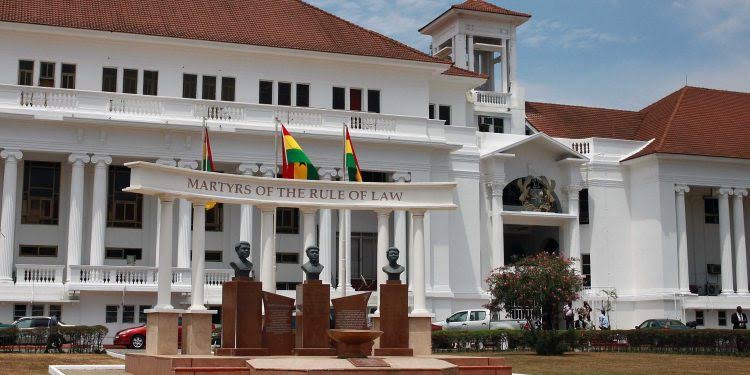

SC to rule on legal vacation sittings Friday
Court Adjourns Case to Friday
The Supreme Court has adjourned proceedings in a case challenging the constitutionality of administrative warrants issued by Chief Justice Paul Baffoe-Bonnie, directing selected High Court judges to continue hearing certain criminal cases during the legal vacation.
The court is expected to deliver its ruling on Friday, August 21, following Thursday’s proceedings. The suit was filed by the Member of Parliament for Ofoase-Ayirebi, Kojo Oppong Nkrumah, who is challenging the decision to continue selected criminal trials during the period when the courts are traditionally on legal vacation.
Lawyer Challenges Attorney General’s Representation
After Thursday’s proceedings, counsel for Kojo Oppong Nkrumah, Frank Davies, renewed his objection to the Attorney General representing the Chief Justice in the case. The Supreme Court had earlier rejected the argument challenging the Attorney General’s representation. However, Mr Davies maintained that because the Chief Justice had been named substantively as a defendant, he should have separate legal representation. According to him, allowing the Attorney General, an arm of the Executive, to represent the head of the Judiciary raises concerns about the constitutional principle of separation of powers.
“The Chief Justice heads an independent organ of the state, the judiciary. We have the judiciary, the legislature, and the executive. They are supposed to be independent organs of the state.”
Despite the court’s position on the matter, Mr Davies said his legal team would take guidance from the eventual ruling and concentrate on the substantive constitutional issues before the court.
Fair Trial Rights at the Centre of Dispute
The substantive case centres on whether the continued hearing of criminal cases during the legal vacation could undermine the constitutional right of accused persons to a fair trial and to representation by lawyers of their choice. Mr. Davies stressed that his client was not seeking to stop the criminal cases from being heard.
“We are not saying that they should not be tried,” he explained. Rather, he argued that continuing the trials during the legal vacation could interfere with the accused persons’ right to fair representation and their choice of legal counsel.
He said lawyers representing some of the accused persons had informed the courts that they were unavailable to attend proceedings during the legal vacation.
Dispute Over Longstanding Vacation Practice
According to Mr Davies, the established practice has been that criminal trials may continue during the legal vacation where the lawyers involved agree to proceed, after which the judge obtains a warrant from the Chief Justice authorising the continuation of the proceedings. He argued that the circumstances surrounding the cases now before the Supreme Court were different because, in his account, the lawyers had not consented to the continuation of the trials. This, he said, created a constitutional concern regarding the accused persons’ ability to secure effective legal representation.
Questions Over Selected Cases
Mr Davies also questioned the basis for selecting particular criminal cases for hearing during the vacation while other matters before the same courts were not given similar priority. “If it is the case that there can be trials during the vacation, why is it that it is only those selected cases which are being tried?” he asked.
The argument places before the Supreme Court not only the question of the Chief Justice’s authority to issue the administrative warrants, but also broader concerns about fair trial rights, legal representation and the separation of powers.
Ruling Expected Friday
The Supreme Court is now expected to settle the constitutional challenge when it delivers its ruling on Friday, August 21.
The decision could provide important guidance on the circumstances under which criminal proceedings may continue during the legal vacation and the extent to which the rights of accused persons and the independence of the Judiciary must be considered when such proceedings are authorised.