
The nuclear option: Ghana’s path to a green energy future
A nation searching for stability
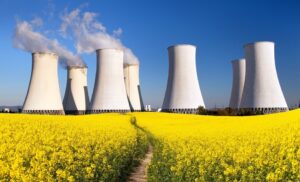
For years, Ghana’s energy story has been anchored in hydroelectric dams and, more recently, solar initiatives. But as climate variability disrupts water levels and demand continues to rise, the cracks in that system are becoming harder to ignore. The question is no longer whether Ghana needs more power. It is how to secure it reliably and sustainably. That question framed the workshop’s theme: “The Decision: How Nuclear Technology and a Stronger Grid Promote Energy Security for Ghana.” Behind the theme was a quiet but unmistakable shift. Nuclear energy once considered too ambitious, too controversial is now being revisited as a serious option.
Opening the conversation, Manager of Public Affairs at Nuclear Power Ghana,
Bellona Gerard Vittor-Quo, suggested, the conversation must be expanded. “This is not just for engineers,” she suggested in tone and intent. Journalists, communicators, and the broader public all have a role to play in shaping how nuclear energy is understood.
The goal of the workshop was not persuasion, but clarity creating space for informed debate rather than speculation.
Policy meets possibility
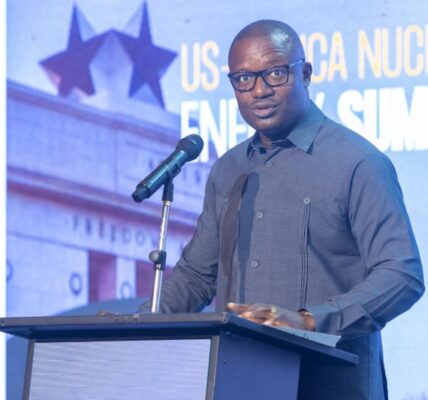
When Dr. Robert B.M Sogbadji, Advisor on Renewable Energy at the Ministry of Energy and Green Transition took over, he didn’t present nuclear power as a silver bullet. Instead, he positioned it as part of a larger puzzle. Ghana, he explained, is committed to a low-carbon future. But renewable sources like solar and hydro while essential are not always consistent. Nuclear energy, in contrast, offers stable, continuous power. The implication was clear: this is not about replacing renewables. It is about reinforcing them. Dr. Sogbadji noted that “Nuclear Power has emerged as a long term agenda and nuclear power could deliver enough energy for industry”.
Listening before deciding
Before diving into technical presentations, the platform turned interactive. Through a live Mentimeter session led by Emmanuel Tetteh of Nuclear Power Ghana, participants shared their expectations anonymously. The responses flickered across the screen safety concerns, cost questions, environmental fears, curiosity about new technologies. It was a revealing moment. For all the technical expertise in the platform, the success of any nuclear programme would ultimately depend on public trust.
From ambition to architecture
Dr. Stephen Yamoah, Executive Director of Nuclear Power Ghana, brought the conversation into sharper focus. He walked participants through the realities of large nuclear reactors, massive infrastructure capable of delivering consistent, high-output electricity for decades. For a growing economy like Ghana, the appeal is obvious. But so are the challenges. High upfront costs. Long construction timelines. The need for stringent regulation. This is not a quick fix. It is a long-term commitment.
Small reactors, big promise
Then came a shift in tone and scale. Small Modular Reactors (SMRs), Dr. Yamoah explained, could change the equation entirely. Smaller, more flexible, and faster to deploy, they offer a more adaptable approach to nuclear energy. For Ghana, the possibilities are significant. SMRs could power industrial zones, support remote communities, and integrate more easily into the existing grid. In a country where energy needs vary widely by region, that flexibility matters.
Confronting fear with facts
If the earlier sessions built understanding, the Q&A session tested it. Moderated by Senior Lecturer at the University of Media, Arts and Communication Institute of Journalism (UniMAC-IJ), Mr. David Dankwa-Apawu, the discussion quickly turned candid. Participants raised tough questions about nuclear waste, accident risks, and whether Ghana is truly ready. There were no easy answers. But the willingness to engage, to question, and to respond openly marked a critical step. Nuclear energy, perhaps more than any other power source, lives and dies by public perception. And perception is shaped in moments like these.
Preparing for the worst
Nuclear Power Ghana’s Alberta Blay’s presentation on emergency preparedness brought the platform back to reality. Her message was direct: safety is not an afterthought, it is the foundation. From early warning systems to coordinated response strategies, she outlined the layers of planning that underpin modern nuclear programmes. The goal is not just to prevent accidents, but to be fully prepared should one occur. It was a sobering reminder that nuclear energy demands vigilance at every level.
The gap between vision and reality
Contributing to the debate, Dr. Sogbadji reflected on the broader journey ahead. Ghana’s nuclear ambitions, he noted, sit at the intersection of vision and discipline. Policies must align. Investments must follow. And political commitment must remain steady over decades, not just election cycles. The dream is alive but so is the complexity.
Telling the story right
In succinct discussions, participants were tasked with a different challenge: how to communicate nuclear energy to the public. Guided by Mr. Dankwa-Apawu, the exercise underscored a powerful truth, facts alone are not enough. How those facts are framed, explained, and shared will shape national opinion. In many ways, the future of nuclear energy in Ghana may depend as much on storytelling as it does on science.
A shift in perspective
By the time the final Mentimeter session closed, something had changed. The questions were still there. The concerns had not disappeared. But there was a noticeable shift from uncertainty to curiosity, from skepticism to cautious engagement. That shift, subtle as it was, may be one of the workshop’s most important outcomes.
At the crossroads
In his closing remarks, Director of Nuclear Power Institute, Dr. Archibold Buah-Kwofie noted that “Today has been very interesting. We’ve head about SMR, large reactors through Dr. Yamoah, emergency preparedness from Madam Alberta Blay, where there is still a lot of work to be done. Personally, I have seen a bit of improvement in terms of reportage. The workshop will help the narrative and let’s continue to push the nuclear agenda”.
The decision ahead
Nuclear energy is no longer a general idea in Ghana. It is a live conversation complex, contested, and increasingly necessary. The path forward will not be simple. It will require balancing opportunity with caution, innovation with responsibility, and ambition with public trust. But if this workshop revealed anything, it is this: Ghana is not rushing the decision. It is building it step by step, question by question, conversation by conversation. And in that careful process lies the real story of how a nation prepares to power its future.