Fact check: Atta Akyea’s claim that CJ’s vacation warrant restricts Justice Achibonga to specific cases is false

Fact check: Atta Akyea’s claim that CJ’s vacation warrant restricts Justice Achibonga to specific cases is false
A warrant issued by Chief Justice Paul Baffoe-Bonnie authorising Justice Francis Apongabuno Achibonga to sit during Ghana’s 2026 legal vacation does not restrict the judge to emergency applications, motions or interlocutory matters. The document, cited by African Editors, gives Justice Achibonga broad authority to sit and conduct hearings at the Specialised Court ‘1’ at the Law Court Complex in Accra throughout the legal vacation.
What the Warrant Says
The warrant is addressed to Justice Achibonga and authorises him to serve as an additional High Court judge during the 2026 legal vacation.
It states:
“By virtue of the powers conferred upon me, I hereby authorise you to sit as an additional High Court Judge at the Specialised Court ‘1’, Law Court Complex, Accra, during the 2026 Legal Vacation and conduct hearings.”
The wording is straightforward. It authorises the judge to “conduct hearings” during the vacation.
There is no reference in the warrant to specific cases that Justice Achibonga is required to hear.
No Restriction to Emergency or Interlocutory Matters
The document also does not expressly state that Justice Achibonga’s jurisdiction during the vacation is limited to emergency applications, motions or interlocutory proceedings. This is important because the contents of the warrant do not support claims that the Chief Justice specifically directed the judge to hear only a particular category of cases.
In other words, while the warrant identifies the court at which Justice Achibonga is authorised to sit, it does not identify particular cases or prescribe that he can only hear emergency or interlocutory matters.
What Atta Akyea Said
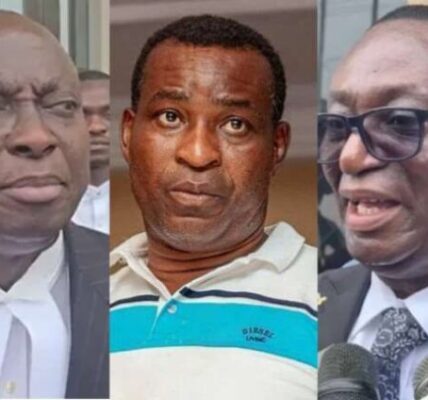
The issue has arisen amid comments by private legal practitioner Samuel Atta Akyea on JoyNews’ Top Story regarding the conduct of substantive cases during the legal vacation. Mr. Atta Akyea argued that part-heard and substantive cases should ordinarily not continue during the vacation, maintaining that vacation judges traditionally deal with urgent matters.
“All the part-heard cases in the realm, they’ve gone to bed. I’m telling you, part-heard cases, the judges are not hearing part-heard cases in the vacation. It’s as clear as daylight,” he said.
He further questioned why certain cases were being allowed to proceed and described the situation as “selective justice.”
“Why do we have to change this thing because there are some special cases in the eyes of somebody and there are some special judges who should continue working?” he asked.
What the Document Actually Establishes
The warrant establishes one clear fact: Justice Achibonga was formally authorised by the Chief Justice to sit as an additional High Court judge at the Specialised Court ‘1’ during the 2026 legal vacation and to conduct hearings.
It does not, however, state that he was appointed specifically to hear particular cases. Neither does it contain an express limitation restricting his work to emergencies, motions or interlocutory applications.
Therefore, a claim that the Chief Justice’s warrant itself directs Justice Achibonga to specific cases or limits him exclusively to emergency or interlocutory matters is false.
The Larger Legal-Vacation Dispute
The warrant does not, by itself, resolve the wider disagreement over the proper scope of proceedings during Ghana’s legal vacation. The issue has become part of an ongoing dispute between the Ghana Bar Association (GBA) and the judiciary over the nature of Vacation Court proceedings.
The GBA has maintained that Vacation Courts traditionally deal mainly with emergencies and interlocutory matters rather than substantive trials. It has also argued that the availability and preparedness of lawyers should be considered when cases are scheduled during the vacation.
Government’s Position
Deputy Attorney-General Dr Justice Srem-Sai has challenged that position, arguing that the authority to determine whether proceedings should take place rests with the court. From that perspective, lawyers do not have the final authority to determine whether a judge who has been duly authorised to sit should conduct a hearing during the legal vacation. The Chief Justice has similarly defended the authority of judges who have been formally authorised to sit during the period.
Verdict: False
The evidence contained in Justice Achibonga’s vacation warrant does not support the claim that the Chief Justice directed him to hear only specific cases or restricted him to emergency and interlocutory matters. The warrant expressly authorises him to “conduct hearings” at the Specialised Court ‘1’ during the 2026 legal vacation.
That does not settle the separate question of whether substantive or part-heard cases should ordinarily be heard during the vacation. But it does mean that such a restriction cannot be read into this particular warrant, because the document contains no such limitation.
Verdict: False.