
Teachers to protest over unpaid salary
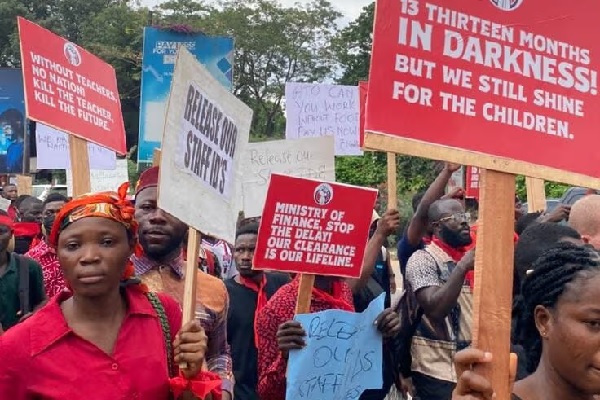
A growing wave of frustration is sweeping through Ghana’s education sector as a coalition of unpaid teachers prepares to take to the streets of Accra. Despite repeated assurances from government officials, many educators say they are yet to receive months—sometimes over a year—of salary arrears owed to them.
Voices from the classroom
Speaking anonymously on The Big Bulletin, hosted by Fritz Delanyo Amegashie, a teacher identified only as Kofi revealed the depth of the crisis. According to him, numerous teachers have continued to work diligently despite receiving only partial payments.
“We have worked for 10 months, some for over a year, but the arrears have not been paid,” Kofi lamented. His account reflects the experiences of many educators who remain committed to their students while grappling with financial uncertainty.
Government promises and lingering doubts
The issue dates back to an earlier protest in October 2025, after which the Minister for Education, Haruna Iddrisu, announced that Cabinet had approved approximately $1.1 billion to clear salary arrears for teachers and some health workers. While partial payments were reportedly made in December, Kofi noted that these did not include the arrears component. Since then, engagements with authorities have yielded little progress, leaving many teachers disillusioned and questioning the government’s commitment.
The planned demonstration
In response, the aggrieved teachers have scheduled a protest march for 15 April 2026. The demonstration will begin at Obra Spot, a well-known gathering point in the city, and proceed to Jubilee House, the seat of Ghana’s presidency. The goal, according to Kofi, is to directly petition the President and highlight what they perceive as unequal treatment compared to other public sector workers.
Payroll challenges and systemic delays
Beyond unpaid arrears, another layer of the problem lies in administrative bottlenecks. Kofi disclosed that dozens of affected teachers have yet to be fully integrated into the government payroll system—an issue that may be contributing significantly to the delays.
This revelation points to deeper systemic inefficiencies that continue to affect not only teachers’ livelihoods but also the broader education system.
A protest with restraint
Despite the mounting frustration, the group has emphasized that the planned protest will be peaceful and non-disruptive. With many schools currently not in session, organizers insist that academic activities will not be affected.
Still, the demonstration underscores a critical moment in Ghana’s education sector—one where educators are demanding not just payment, but recognition, fairness, and accountability.