
Mahama cuts sod for KEDA Ghana expansion
In the coastal town of Shama, anticipation filled the air as John Dramani Mahama stepped onto the ceremonial grounds. Community members gathered shoulder to shoulder with business leaders, all eager to witness a moment that promised to reshape Ghana’s industrial landscape.
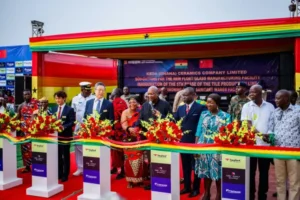
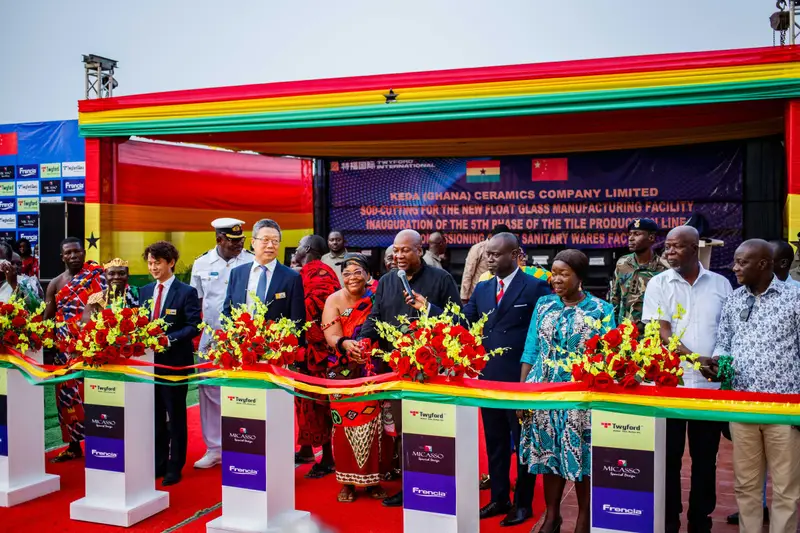
With a firm grip on the shovel, Mahama cut the sod, signaling the expansion of KEDA Ghana Ceramics Company Limited. The gesture was simple, yet powerful—it marked the beginning of a new phase of growth, one that would bring jobs, innovation, and opportunity. To many present, it was more than a ceremony. It was a declaration that Ghana was ready to move beyond raw exports into full-scale industrial production.
Mahama cuts sod for float glass factory in Shama
Moments later, attention shifted to an even more ambitious vision—the float glass manufacturing plant. As Mahama addressed the crowd, his voice carried conviction. He described the project as a “game changer,” one that would reduce Ghana’s reliance on imported glass and position the country as a producer within the global market. Under policies tied to the 24-Hour Economy initiative, he explained, companies like KEDA would benefit from tax exemptions on imported machinery. The goal was clear: remove barriers, attract investment, and accelerate industrial growth.
For the people of Shama, the promise of a glass factory meant more than production—it meant livelihoods, skills, and a future rooted in local industry.
A New Industrial Dawn at Shama
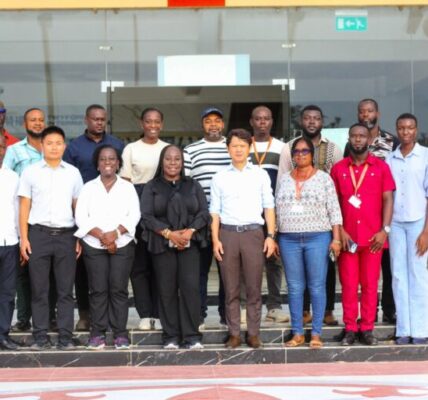
The ceremony unfolded like a story of transformation. Inside the KEDA facility, machines hummed with precision, producing tiles and sanitary wares at impressive scale. Workers moved confidently across the factory floor, symbols of a growing skilled workforce.
KEDA’s expansion was already making waves. With exports reaching countries like the United States and France, Ghana’s name was quietly gaining recognition in global ceramics markets.
Mahama highlighted the broader picture: a strengthening economy, falling inflation, and Ghana’s rise among Africa’s leading economies. To him, the developments in Shama were not isolated—they were part of a national “reset agenda.”
Nearby, plans for a new hospital added another layer to the story. Industrial growth, it seemed, was being matched with social investment.
Western Region positioned as an export hub
For years, Ghana’s Western Region had been known for its natural resources. But on this day, a new identity was taking shape—one driven by manufacturing and exports.
Regional leaders spoke of opportunity. With KEDA’s operations expanding, the region could become a gateway for trade across West Africa, particularly within ECOWAS. The shift was subtle but significant: from extracting resources to adding value, from dependency to competitiveness.
KEDA’s commitment to Ghana’s development
At the heart of the story stood KEDA itself. Its Managing Director, Li Wei, spoke not just of profits, but of partnership. He described a future where the company’s contributions would go beyond taxes and exports—touching lives through employment, education, and community support.
Scholarships for students, housing for workers, and investments in local infrastructure painted a picture of a company deeply embedded in Ghana’s development. For many in Shama, KEDA was no longer just a factory. It was becoming part of the community’s identity.
Strengthening Ghana–China industrial ties
Standing beside Mahama was Shen Yanchang, Chairman of Twyford Group. His presence underscored the international dimension of the event.
He praised Ghana’s stability and openness to business, expressing confidence in the country’s future. Government officials echoed similar sentiments, noting that deeper cooperation between Ghana and China was already underway. New agreements in manufacturing and agro-processing were on the horizon, promising even greater collaboration.
A tour of progress
After the speeches, Mahama toured the facility. The scale of operations told its own story—automated systems, vast production lines, and a workforce in motion. Accompanied by industry leaders and officials, he observed firsthand the transformation taking place. It was not just about infrastructure; it was about capability.
Before departing, KEDA extended a gesture of goodwill, donating supplies to schools and health centres. The act reinforced a simple message: development must include the people it serves. The Symbolism of the Sod-Cutting
As the dust settled, the significance of the day became clearer.
The sod-cutting for the float glass factory symbolized more than a new project. It represented a shift in mindset—from importing to producing, from potential to performance. For Shama, it marked the beginning of a new chapter. For Ghana, it was a step toward industrial confidence.
And for those who witnessed it, the message was unmistakable: the future of Ghana’s economy was no longer being imagined: it was being built.