
KGL’s ₵153m tax payment: GRA demands nationwide compliance
A defining moment in Accra
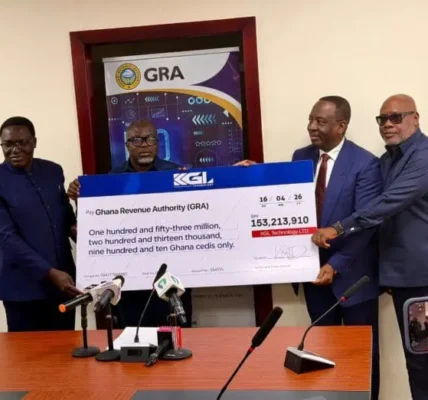
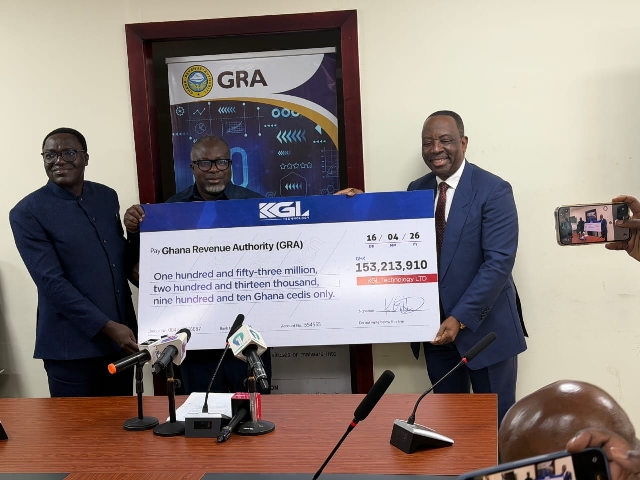
At the headquarters of the Ghana Revenue Authority in Accra, a powerful message echoed beyond the walls of the ceremony hall. What began as the presentation of over ₵153 million in corporate income tax by the KGL Group quickly transformed into a nationwide call to action—one aimed at every Ghanaian. The moment was more than symbolic; it became a rallying point for responsibility, accountability, and collective progress.
A call that resonates nationwide
Standing before stakeholders and officials, Anthony Kwasi Sarpong delivered a message that cut straight to the heart of Ghana’s development challenge: taxation is not optional—it is essential. He urged individuals, small businesses, and large corporations alike to meet their obligations, reminding them that no external force will build the nation. The responsibility, he stressed, lies squarely with Ghanaians themselves.
His words carried urgency, particularly as the tax filing period continues—a window of opportunity for citizens to regularize their affairs and contribute meaningfully to national growth.
KGL Group: Setting the standard
The spotlight naturally turned to the KGL Group, whose substantial tax payment served as a living example of compliance in action. Their contribution was not just acknowledged—it was elevated as a benchmark. Mr. Sarpong pointed to the Group’s actions as proof that responsible corporate behavior is achievable and necessary. In a system that relies heavily on voluntary compliance, such leadership becomes a catalyst for broader change.
Why taxes matter more than ever
Behind the call for compliance lies a simple but profound truth: taxes power the nation. From roads and schools to hospitals and public services, every sector depends on revenue generated domestically. The GRA emphasized that when citizens fail to pay taxes, the burden shifts unfairly, weakening the system and slowing development. But when compliance increases, the benefits ripple outward—improving lives and strengthening the economy.
Reforming the system, building trust
To support this vision, the Ghana Revenue Authority is undertaking reforms aimed at making tax administration more efficient and transparent. These include system upgrades and reviews of tax laws designed to ease compliance while fostering trust between taxpayers and the state. The message was clear: compliance must be matched with fairness. As systems improve, so too should public confidence in how tax revenues are managed.
Leadership from indigenous businesses
Mr. Sarpong also issued a direct challenge to local enterprises—step forward and lead. Indigenous businesses, he noted, have a unique role to play in shaping Ghana’s future by demonstrating discipline and integrity in meeting their obligations. Answering that call, Alex Apau Dadey, Executive Chairman of KGL Group, reaffirmed his company’s stance. For him, taxes are not a burden but a duty owed to the people. His words were simple yet profound: businesses are merely custodians of wealth, returning to society what rightfully belongs to it.
A shared national responsibility
As the event drew to a close, one message stood above all others—tax compliance is not the responsibility of a few, but of all. Workers, traders, professionals, and business owners each have a role to play. The call from the Ghana Revenue Authority was unmistakable: Ghana’s future depends on collective effort. Every tax paid is a step toward better infrastructure, stronger institutions, and a more resilient nation. And in that shared effort lies the promise of a Ghana built by its own people—for its own people.