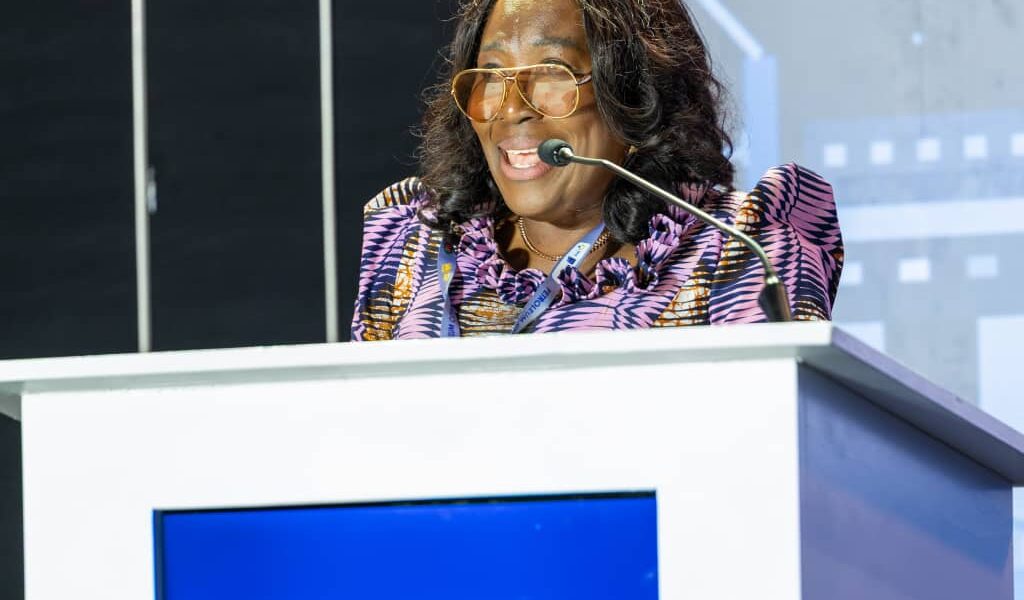
Ghana Gas CEO calls for stronger indigenous capacity and investment to deepen local content in petroleum sector

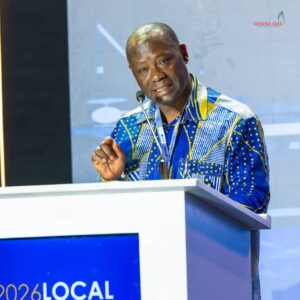
Ghana National Gas Limited Company (Ghana Gas) Chief Executive Officer, Ms Judith Adjoba Blay, has called for a renewed focus on building the technical capacity, competitiveness and sustainability of indigenous companies to strengthen Ghana’s local content agenda and secure the future of the petroleum industry.
She said Ghana must move beyond measuring local content through participation percentages and concentrate on developing Ghanaian companies capable of undertaking complex technical assignments and competing in international markets.
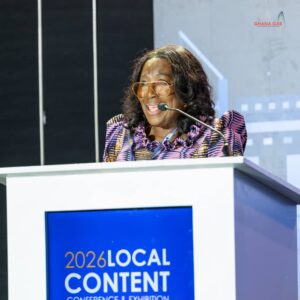
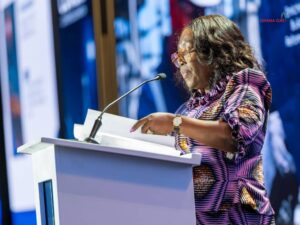
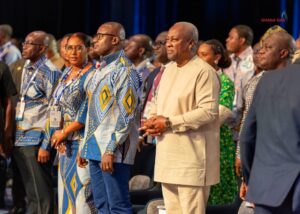
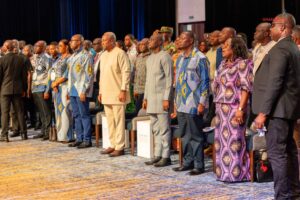
Speaking at the 2026 Local Content Conference and Exhibition (LCCE), held alongside the 15th anniversary celebration of the Petroleum Commission, Ms Blay stressed that the next phase of Ghana’s local content journey must prioritise quality participation, knowledge transfer, strategic partnerships and sustainable value creation.
The conference was held under the theme: “Enriching Local Content for Sustainable Growth: Building a Resilient Upstream Sector Through Reforms and Partnerships to Spur Competitiveness and Investment.”
Ghana’s Local Content Journey Has Come of Age
Ms Blay described the occasion as particularly significant, not only because it marked 15 years of the Petroleum Commission but also because of her personal connection to the institution, where she spent eight years of her professional career. She described her return as a homecoming, recalling her involvement in the planning and execution of several editions of the Local Content Conference and Exhibition.
She also congratulated the Commission’s Chief Executive Officer, Emefa, for successfully organising an edition graced by the President of the Republic, John Dramani Mahama, for the first time.
Reflecting on Ghana’s local content achievements, Ms Blay observed that the country’s policy direction had evolved significantly from its initial emphasis on creating opportunities for Ghanaian participation to a broader focus on capacity development, competitiveness, sustainability and value creation.
According to her, Ghana’s local content framework and the Petroleum Commission’s regulatory work have become important reference points for emerging petroleum-producing countries, including Uganda, Namibia and Liberia, which have drawn lessons from Ghana’s experience in developing their own policies and regulatory approaches.
She said the recognition demonstrated the progress Ghana had made in promoting indigenous participation in the petroleum industry, while emphasising the need to build on those achievements.
Ghana Gas Demonstrates the Power of Indigenous Capacity
Highlighting Ghana Gas’ contribution to the local content agenda, Ms Blay said the company had made indigenous participation a central pillar of its operational philosophy, drawing inspiration from the Petroleum Commission’s leadership in promoting local content.
She disclosed that Ghana Gas had developed a fully indigenous workforce responsible for operating and maintaining its gas processing, distribution and transmission infrastructure.
The infrastructure, she noted, contributes approximately 83 per cent of thermal power production and supplies about 30 per cent of the country’s liquefied petroleum gas (LPG) for domestic consumption and industrial development.
She described the achievement as significant, considering the technical complexity and specialised expertise required to operate and maintain such critical national infrastructure.
Ms Blay said the experience demonstrated that Ghanaians possessed the capacity to manage and operate strategic national assets when supported by deliberate investments in human capital development, knowledge transfer and technical training.
She, however, maintained that the company’s local content ambitions extended beyond building an indigenous workforce to creating opportunities for businesses and individuals within its operational catchment areas and host communities.
Infrastructure Expansion to Create More Opportunities for Ghanaians
Ms Blay said expanding Ghana Gas’ infrastructure and operational capacity would be essential to meeting growing demand for natural gas while creating additional opportunities for indigenous businesses and professionals.
She outlined strategic infrastructure projects being pursued by the company, including the addition of a third train compressor to enhance gas processing capacity and improve operational reliability.
She also highlighted the proposed construction of the approximately 278-kilometre Takoradi–Tema (T-T) Pipeline as a major investment aimed at expanding the country’s gas transmission network. According to her, the projects would strengthen the resilience of Ghana’s gas infrastructure, support industrial expansion and create significant opportunities for Ghanaian companies, technical professionals and communities along the project corridors.
She explained that the investments would provide local businesses with opportunities to participate in construction, engineering, technical services and other activities associated with the expansion of the gas industry.
Ms Blay stressed that making local content more inclusive required deliberately extending the benefits of industrial growth to communities directly affected by the company’s operations.
Sustained Upstream Investment Critical to Gas Security
Beyond investments in midstream gas infrastructure, the Ghana Gas CEO called for increased investment in the upstream petroleum sector to secure sustainable and reliable gas supplies for the company’s operations.
She explained that sustained investment in exploration, field development and production was necessary to provide the feedstock required to optimise existing facilities, meet increasing market demand and support future expansion plans.
She noted that the growth and sustainability of Ghana’s gas infrastructure depended significantly on the availability of reliable gas supplies, making upstream investment an essential component of the country’s broader energy security strategy.
She therefore encouraged stakeholders to recognise the interdependence between upstream petroleum development and midstream gas operations in building a resilient energy sector.
Partnerships Key to Building Competitive Indigenous Companies
Addressing the conference theme, Ms Blay described partnerships as a critical driver of sustainable local content development.
She said that although Ghana had made considerable progress in promoting indigenous participation and building local capacity, the industry needed to deepen these gains through stronger collaboration among local companies, industry players and international partners.
She observed that the increasing technical complexity of opportunities in the petroleum industry meant that some assignments might be beyond the capacity of individual indigenous companies.
To address this challenge, she called for greater encouragement of strategic partnerships, joint ventures and collaborations that would enable Ghanaian companies to combine their expertise, resources and technical capabilities to execute larger and more complex projects. According to her, such arrangements would strengthen indigenous enterprises, improve their competitiveness and position them to take advantage of opportunities beyond Ghana’s borders.
She emphasised that Ghana’s ultimate ambition should be to develop indigenous companies capable of competing across the African continent and within the global petroleum industry.
A Call for Greater Ambition Beyond 15 Years
As the Petroleum Commission celebrates its 15th anniversary, Ms Blay urged stakeholders to acknowledge the progress made while remaining ambitious about the future of Ghana’s petroleum industry.
She reaffirmed her pride in having contributed to the Commission’s local content journey and expressed optimism about continued collaboration between the Petroleum Commission and Ghana Gas.
She said such cooperation would be essential to building a more competitive, inclusive and sustainable petroleum industry capable of creating lasting economic opportunities for Ghanaians.
Ms Blay congratulated the Petroleum Commission on its 15th anniversary and expressed hope that deliberations at the 2026 Local Content Conference and Exhibition would translate into concrete actions to advance local content and drive sustainable growth in the petroleum sector.
She concluded by calling for a collective commitment to strengthening indigenous capacity, deepening partnerships and attracting the investment needed to secure the long-term competitiveness and resilience of Ghana’s petroleum industry.