
NHIA hosts Ethiopian delegation to strengthen primary healthcare financing
Benchmarking visit deepens Ghana-Ethiopia health collaboration
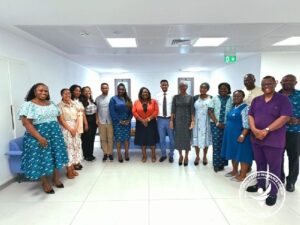
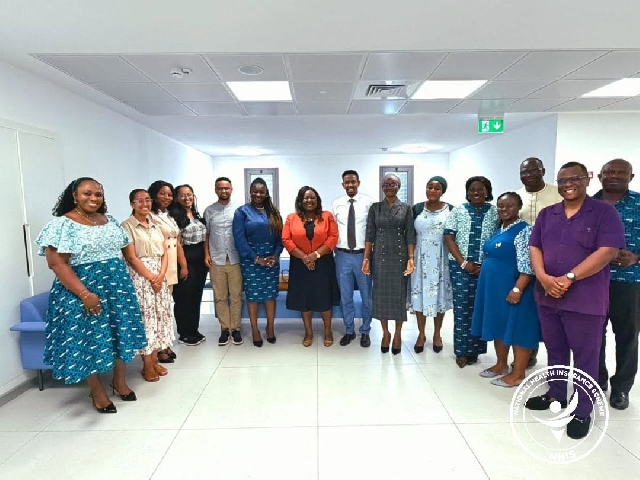
The National Health Insurance Authority (NHIA) has hosted a delegation from Last Mile Health Ethiopia on a benchmarking visit aimed at learning from Ghana’s experience in financing Primary Health Care (PHC) and advancing Universal Health Coverage (UHC). The delegation, led by the Managing Director of Operational Services at Last Mile Health Ghana, Ms. Naa Adorkor Yawson, visited the NHIA to gain insights into Ghana’s healthcare reforms, financing mechanisms, and strategies for improving equitable access to healthcare services.
NHIA reaffirms commitment to knowledge sharing
Welcoming the delegation on behalf of the Deputy Chief Executive of Operations, Dr. Senanu Kwesi Djokoto, the Acting Director of Operations at the NHIA, Ms. Mariam Musah, underscored the Authority’s commitment to sharing best practices that promote Universal Health Coverage across Africa. She noted that collaboration and the exchange of experiences among African countries remain critical in strengthening healthcare systems and improving access to quality healthcare services.
Ghana’s journey towards stronger primary healthcare
During a presentation on financing Primary Health Care in Ghana, Ms. Musah traced the country’s healthcare reform journey from the 1978 Alma-Ata Declaration through several policy developments that have shaped the nation’s health sector. She highlighted major milestones, including the establishment of the Ghana Health Service and the introduction of the Community-based Health Planning and Services (CHPS) programme in the 1990s. According to her, the CHPS initiative has played a transformative role in bringing preventive and promotive healthcare services closer to communities, significantly improving access to care, especially in underserved areas.
She emphasized that CHPS remains one of the cornerstones of Ghana’s primary healthcare system.
NHIS expansion improves financial access to care
Ms. Musah also pointed to the introduction of the National Health Insurance Scheme (NHIS) in 2003 as a landmark reform that replaced the “cash-and-carry” system, under which patients paid directly for healthcare services at the point of care. She explained that the NHIS has substantially improved financial access to healthcare, with current coverage estimated at approximately 66 percent of Ghana’s population. The figure is expected to rise to nearly 70 percent in the near future. The NHIS benefits package, she noted, currently covers about 95 percent of the country’s disease burden, providing essential protection for millions of Ghanaians.
Persistent challenges remain
Despite notable progress, Ms. Musah acknowledged that several challenges continue to affect healthcare delivery and financing. She identified persistent gaps in equity, service availability, and financial protection, particularly among vulnerable populations who remain outside the insurance scheme. She further noted that some primary healthcare services and essential medicines are not consistently available across all levels of care. Additionally, out-of-pocket expenses and informal co-payments continue to place a financial burden on some patients.
Ghana moves towards free primary healthcare
To address these challenges, Ms. Musah disclosed that Ghana is transitioning towards a Free Primary Health Care policy designed to guarantee access to essential health services irrespective of NHIS membership. The proposed policy will cover critical services, including maternal and child healthcare, malaria treatment, management of minor ailments, and treatment of chronic conditions such as hypertension and diabetes at CHPS compounds and health centres. According to her, the initiative seeks to eliminate financial barriers to healthcare while maximizing the use of existing health infrastructure. The NHIA is expected to play a pivotal role in mobilizing resources and reimbursing healthcare providers under the programme.
NHIA officials showcase financing and claims Systems
The engagement also featured detailed presentations on the NHIS Primary Health Care benefits package and reimbursement mechanisms.
Ms. Claudia Sowah, Manager at the Strategic Health Purchasing Directorate (SHPD), outlined tariff structures and strategic purchasing approaches that support efficient service delivery.
Meanwhile, the Acting Director of Claims, Dr. Abigail Nyarko Codjoe Derkyi-Kwarteng, provided an overview of the NHIS claims processing and reimbursement systems, explaining how healthcare providers are compensated under the scheme.
Ethiopia shares its primary healthcare experience
On behalf of Last Mile Health Ethiopia, Senior Programme Coordinator Mr. Tsega-Ab Abebaw delivered a presentation on Ethiopia’s Primary Health Care system. He highlighted the country’s achievements, ongoing reforms, and challenges in expanding access to quality healthcare services, providing an opportunity for mutual learning between the two countries.
Delegation praises NHIA for insightful engagement
Speaking on behalf of the visiting team, Ms. Yawson expressed appreciation to the NHIA for the warm reception and comprehensive presentations. She said the lessons learned from Ghana’s healthcare financing model would contribute significantly to efforts aimed at strengthening Primary Health Care financing and service delivery in Ethiopia. Ms. Yawson further stressed the importance of cross-country collaboration in achieving Universal Health Coverage across Africa and expressed optimism about future partnerships between the two institutions.
Advancing Universal Health Coverage through collaboration
The visit highlighted the growing importance of regional cooperation in addressing healthcare financing challenges and improving access to quality health services. By sharing experiences and best practices, Ghana and Ethiopia continue to demonstrate how collaboration can accelerate progress towards stronger primary healthcare systems and the broader goal of Universal Health Coverage across the African continent.