
Ghana exits IMF bailout programme
Ghana concludes IMF extended credit facility programme
The Government of Ghana has officially announced the successful completion of its Extended Credit Facility (ECF) bailout programme with the International Monetary Fund (IMF), marking a major turning point in the country’s economic recovery journey. According to the government, the achievement signals the restoration of macroeconomic stability and debt sustainability ahead of the programme’s original timeline. The announcement reflects renewed confidence in Ghana’s economy after years of fiscal challenges, currency depreciation, and rising public debt
Government Recalibrates the Programme
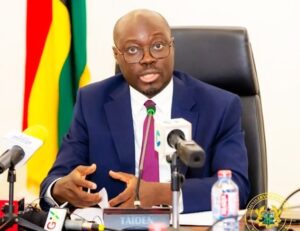
In a statement issued by Felix Kwakye Fosu, the government explained that after the IMF programme went off track at the end of 2024, the administration of John Mahama took decisive measures in 2025 to restore discipline and reposition the programme for success.
The statement noted that the government introduced frontloaded fiscal consolidation measures, expenditure rationalisation policies, and structural economic reforms aimed at stabilising the economy and rebuilding investor confidence.
Positive economic indicators emerge
The government highlighted several improvements that have resulted from the reforms. Inflation has reportedly declined significantly, while the Ghana cedi has strengthened against major foreign currencies. In addition, Ghana’s public debt-to-GDP ratio has fallen sharply, and economic growth has rebounded strongly. Authorities say these developments indicate that the country’s economy is regaining stability after a prolonged period of financial strain.
Ghana’s credit ratings improve
Another major outcome of the reforms has been the improvement in Ghana’s sovereign credit ratings. According to the statement, the country has moved from restricted default or “junk” status to a ‘B’ rating with a positive outlook.
The government described this as a five-level upgrade, reflecting improved fiscal performance, stronger external reserves, normalised creditor relations, and renewed market confidence in the Ghanaian economy.
Foreign reserves reach record high
The statement also revealed that Ghana’s gross international reserves have reached an all-time high of approximately US$14.5 billion as of February 2026. This represents nearly six months of import cover. Government officials believe the strong reserve position gives Ghana the ability to withstand external economic shocks without relying on emergency financial assistance.
End of Ghana’s IMF bailout era
The announcement effectively marks the end of Ghana’s financial bailout relationship with the IMF under the ECF programme. The government expressed gratitude to Ghanaians for their patience, sacrifices, and resilience throughout the economic recovery period. Officials acknowledged that citizens endured difficult economic conditions while reforms were being implemented.
Transition to policy coordination instrument
Although the bailout programme has ended, Ghana will continue to engage with the IMF through a Policy Coordination Instrument (PCI).
The PCI is a non-financing arrangement designed to support countries implementing economic reforms. It provides technical assistance, helps signal policy credibility to investors, and can facilitate access to financing from development partners and private investors. Government officials say the new arrangement will allow Ghana to maintain economic discipline while avoiding additional borrowing from the IMF.
Commitment to economic discipline and investment
The government reaffirmed its commitment to prudent economic management, fiscal discipline, transparency, and good governance.
According to the statement, the administration of President Mahama remains focused on creating an attractive environment for both domestic and foreign investment while sustaining economic growth and stability.
IMF staff visit and final review
The announcement follows a visit by an IMF staff delegation led by Ruben Atoyan from April 29 to May 15, 2026.
During the visit, discussions focused on Ghana’s 2026 Article IV consultation, the sixth and final review of the ECF programme, and the government’s request for the non-financing PCI arrangement. The IMF team also met with senior government officials and a broad range of stakeholders as part of the review process.