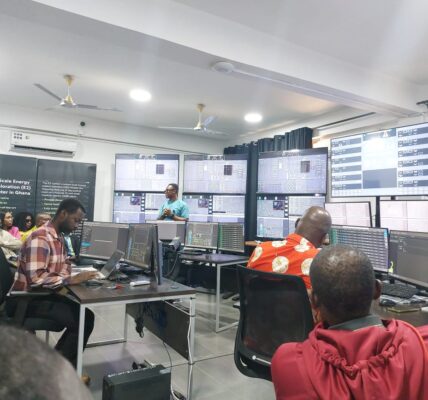
33rd Mgt Workshop: GSA CEO calls for stronger regulatory enforcement and accountability in 2027


The Chief Executive Officer (CEO) of the Ghana Shippers’ Authority (GSA) Prof. Ransford Gyampo has called on Management to intensify efforts towards effective implementation of the Authority’s expanded regulatory mandate, strengthen institutional accountability and improve service delivery to shippers. He made the call at the opening of the Authority’s 33rd Management Workshop, being held at Safari Valley, Adukr om, from November 21 to 24, 2026.
Addressing Management members and distinguished colleagues, the CEO emphasised that the workshop presented an important opportunity for the Authority to assess its performance, review existing strategies and agree on practical measures to enhance institutional effectiveness. He noted that the progress made by the Authority over the years was the result of collective commitment, teamwork, discipline and a shared determination to advance its statutory mandate. According to him, the workshop was particularly significant as the Authority navigates a major phase of its institutional transformation following the enactment of the Ghana Shippers’ Authority Act, 2024 (Act 1122).
Expanded Regulatory Mandate Requires Institutional Transformation
The CEO observed that Act 1122 had expanded the Authority’s statutory mandate and strengthened its regulatory authority over the commercial activities of shippers and shipping service providers across the sea, air and land transport sectors.
He explained that the expanded mandate required a corresponding strengthening of the Authority’s institutional structures, operational processes, human resource capacity and management systems.
He therefore urged Management to ensure that the Authority’s organisational culture, leadership practices and institutional capabilities were aligned with the expectations of a modern and effective regulator.
He further stressed the need for staff to demonstrate the Authority’s core values of integrity, excellence, teamwork, resilience, passion and commitment, and continuous personal development in their daily activities and professional conduct.
GSA Urged to Deepen Regulatory Enforcement
On the Authority’s transition from an advocacy institution to an industry regulator, the CEO called for a shift from merely establishing regulatory frameworks to achieving tangible results through effective oversight, compliance monitoring and enforcement.
He identified the registration of shipping service providers, monitoring of compliance with approved shipping charges and minimum service standards, timely resolution of complaints and enforcement of applicable regulatory requirements as critical areas requiring sustained attention.
He emphasised that regulatory interventions must be visible, consistent, evidence-based and proportionate to promote transparency, accountability, fairness and efficiency across the shipping and logistics value chain.
He added that the Authority’s regulatory effectiveness must ultimately be reflected in improved industry practices, stronger protection of shippers’ interests and reduced costs of doing business.
The CEO consequently called for stronger coordination among departments and zonal offices, supported by clear accountability and the requisite technical capacity to deliver on the Authority’s expanded responsibilities.
GSA Highlights Key Achievements in 2026
As part of the workshop’s focus on performance assessment, the CEO highlighted several achievements recorded by the Authority in 2026 in advancing its statutory mandate and strengthening operational effectiveness.
Among the notable interventions was the regulation of shipping charges to protect shippers, particularly the Authority’s interventions concerning the Container Administrative Charge (CAC).
He also highlighted regulatory enforcement and shipper protection through the courts, which resulted in the affirmation of the Authority’s enforcement powers under Act 1122 and the recovery of outstanding rent through garnishee proceedings.
Other achievements included the onboarding of Shipper Registration on the Integrated Customs Management System (ICUMS), as part of efforts to digitalise the Authority’s operations, and the development of a digital Non-Tariff Barriers (NTB) Reporting and Resolution Platform.
The CEO further cited the nationwide sensitisation on ECOWAS axle-load regulations and the Revised Letters of Commitment Guidelines for 2026, as well as the successful conclusion of the 2026/27 Cocoa Freight Negotiations.
He also mentioned the hosting of the Accra Convention on Negotiable Cargo Documents (NCD), which enhanced Ghana’s profile within the international shipping and logistics community.
Other key milestones included:
* Implementation of an Enterprise Risk Management Policy to strengthen the Authority’s capacity to anticipate and mitigate risks.
* Progress in developing critical logistics infrastructure, with the Akatekyiwa Freight Park approximately 70 per cent complete.
* Completion and rollout of the Authority’s 2026–2030 Strategic Plan to guide its transformation into a modern, data-driven and proactive multimodal regulator.
* Development of Standard Operating Procedures and Service Level Agreements for shipping service providers, including freight forwarders, shipping line agents and hauliers.
* Renewal of bilateral cooperation agreements with counterparts in Niger and Mali.
* Successful implementation of the GSA–Angola Shippers Council Memorandum of Understanding through an exchange programme.
* Full compliance with statutory obligations to the State Interests and Governance Authority (SIGA) and other statutory bodies.
He noted that these achievements demonstrated the Authority’s commitment to trade facilitation, shipper protection and improved service delivery.
However, he cautioned that performance assessment must go beyond activities undertaken and outputs delivered, insisting that the real measure of success was the actual impact of interventions on regulatory compliance, the challenges confronting shippers and the Authority’s operational efficiency.
He therefore urged Management to undertake candid and evidence-based deliberations to identify implementation gaps, examine their underlying causes and agree on practical corrective measures to improve performance in 2027.
Four Strategic Priorities Identified for 2027
Looking ahead to 2027, the CEO outlined four critical areas that must guide the Authority’s activities and resource allocation.
1\. Strengthening Regulatory Implementation and Enforcement
He called for accelerated development and operationalisation of the systems, guidelines, standard operating procedures and institutional arrangements required to give full effect to Act 1122.
This, he explained, must include the registration of shipping service providers, compliance monitoring, oversight of approved charges and minimum service standards, as well as the effective application of the Authority’s enforcement powers.
He stressed the need to build the technical and institutional capacity required to translate the Authority’s regulatory mandate into tangible improvements in the commercial shipping environment.
2\. Improving Shipper Engagement and Service Delivery
The CEO underscored the importance of understanding the needs and challenges of shippers as a basis for effective regulation.
He urged Management to leverage the Authority’s shipper registration and database systems to strengthen stakeholder engagement, education and complaints management.
He also called for greater effectiveness of the zonal offices and Shipper Complaints and Support Units in providing assistance to shippers, addressing their concerns and monitoring industry compliance.
According to him, the Authority must become more accessible, responsive and relevant to the needs of the shipping community.
3\. Leveraging Information Technology and Data
He called for the transformation of the Authority into a more integrated and data-driven institution, with technology supporting regulatory operations, administrative processes, performance monitoring, complaints management and decision-making.
He emphasised that reliable industry data and timely management information must increasingly inform the Authority’s policies, regulatory interventions and strategic decisions.
He further encouraged the adoption of digital solutions to improve efficiency, minimise operational bottlenecks and strengthen institutional transparency.
4\. Strengthening Institutional Performance and Accountability
The CEO stressed the need to align departmental and individual performance targets with the Authority’s strategic objectives.
He charged Heads of Departments and Zonal Managers to take ownership of their respective deliverables and ensure regular monitoring and reporting of performance.
He also called for stronger interdepartmental collaboration, the elimination of operational silos and proactive management of strategic risks that could undermine the achievement of corporate objectives.
He maintained that these priorities must be translated into clear departmental work plans, measurable performance indicators and specific deliverables for which responsible officers would be held accountable.
Management Charged to Strengthen Accountability and Leadership
The CEO further emphasised that one of the most important outcomes of the workshop should be a renewed commitment to management accountability and collective institutional responsibility.
He described the role of Management members as pivotal to the successful implementation of the Authority’s corporate objectives, noting that managers were responsible not only for implementing management decisions but also for providing the leadership, direction and supervision required to achieve results.
He specifically charged Heads of Departments and Zonal Managers to take responsibility for the performance of their respective units, anticipate implementation challenges and proactively initiate corrective measures.
He also called for improved internal communication to ensure that decisions taken at Management level were translated into concrete actions.
According to him, the Authority must cultivate a management culture where commitments are respected, performance gaps are addressed promptly and individuals and departments take ownership of institutional outcomes.
He added that Management must remain intentional about strengthening internal processes, improving the utilisation of institutional resources and safeguarding the assets entrusted to the Authority to ensure its efficiency and financial sustainability.
CEO Calls for Renewed Commitment to GSA’s Mandate
In his concluding remarks, the CEO described the Authority as being at a defining moment in its institutional journey, noting that the expectations of government, industry stakeholders and the shipping community continued to evolve.
He said the Authority must demonstrate the institutional capacity, leadership commitment and operational discipline required to meet these expectations.
He emphasised that the GSA’s success would not be measured merely by the number of activities undertaken or policies developed, but by the effectiveness of its regulatory interventions, the quality of services provided, stakeholder confidence and tangible improvements delivered for shippers in Ghana.
He urged Management members to approach the workshop with open minds, engage constructively, confront difficult issues and take collective responsibility for addressing institutional shortcomings.
He reiterated that the central challenge before the Authority was to translate its expanded statutory mandate into effective regulatory action, measurable institutional performance and tangible value for shippers.
The CEO subsequently declared the 33rd Management Workshop of the Ghana Shippers’ Authority officially open and wished participants fruitful deliberations and a successful workshop.
The four-day workshop, taking place from November 21 to 24, 2026, is expected to provide Management with an opportunity to review institutional performance, strengthen strategic alignment and establish clear priorities and commitments to guide the Authority’s operations in 2027.