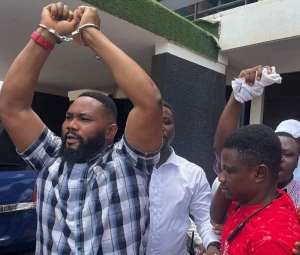

NPP’s Baba Amando re-arrested and remanded
What began as a moment of relief quickly turned into renewed uncertainty for Abubakar Yakubu, popularly known as Baba Amando. Just hours after regaining his freedom, the Sunyani Communications Officer of the New Patriotic Party (NPP) found himself back in custody. On Tuesday, 14 April 2026, an Accra Circuit Court ordered his remand for one week—an unexpected twist that has intensified political tensions across the country.
From release to re-arrest
Yakubu’s ordeal began a day earlier when he was arrested by the police over controversial social media posts. Late Monday, he was granted bail by the Criminal Investigations Department (CID), raising hopes among supporters that the matter might de-escalate.
But those hopes were short-lived.
By Tuesday, he had been re-arrested and brought before the court, which ruled that he be held in custody while investigations continue. The decision stunned observers and shifted the narrative from routine legal proceedings to a high-stakes national issue.
The allegations at the center
At the heart of the case are Facebook posts allegedly made by Yakubu, which authorities claim mocked John Dramani Mahama and other public officials.
The content of these posts has not been fully detailed in court, leaving many questions unanswered. Still, their impact has been significant—sparking a nationwide debate about the boundaries of political commentary in the digital age.
Unclear charges, growing concerns
Despite the seriousness of the situation, the exact charges against Yakubu remain unclear. This lack of transparency has fueled speculation and concern among political observers, civil society groups, and party supporters. Many are asking whether due process is being fully observed—and whether the legal action is proportionate to the alleged offence.
Political Reactions and Accusations
The New Patriotic Party has strongly condemned the re-arrest and remand, describing it as excessive and politically motivated. Party officials argue that such actions risk undermining Ghana’s democratic foundations, warning that they could discourage citizens from expressing dissenting views. The case has also drawn attention to earlier reports that Yakubu and Kwame Baffoe (popularly known as Abronye DC), the Bono Regional Chairman of the NPP, had initially been granted bail before the court intervened.
A broader national debate
Beyond the courtroom, the incident has reignited a deeper national conversation—one that sits at the intersection of free speech, political accountability, and national security. Analysts suggest that this case could become a defining moment in Ghana’s democratic journey, particularly in how it addresses expression on digital platforms.
All eyes on the Judiciary
As Yakubu awaits his next court appearance, the spotlight remains firmly on the judiciary and law enforcement agencies. For many Ghanaians, the stakes go beyond one individual. The outcome of this case may help shape public trust in institutions and determine how far citizens can go in criticising those in power.
For now, the story of Abubakar Yakubu remains unresolved—caught between law and liberty, authority and expression, in a nation closely watching every move.