
$500m petroleum revenue: PIAC demands accountability
Fresh concerns have emerged over more than $500 million in petroleum revenue, as the Public Interest and Accountability Committee (PIAC) demands clarity and accountability. At the center of the issue is Explorco, a subsidiary of the Ghana National Petroleum Corporation (GNPC), which is alleged to have failed to properly account for over $561 million owed to the state.
Unanswered questions over revenue
According to PIAC, repeated requests for explanation have not yielded satisfactory answers. The committee says the funds—amounting to exactly $561,648,785.37—have remained unaccounted for over several years. This prolonged lack of clarity has raised serious concerns about transparency in Ghana’s oil revenue management, especially given the scale of the amount involved.
PIAC takes its fight to the regions
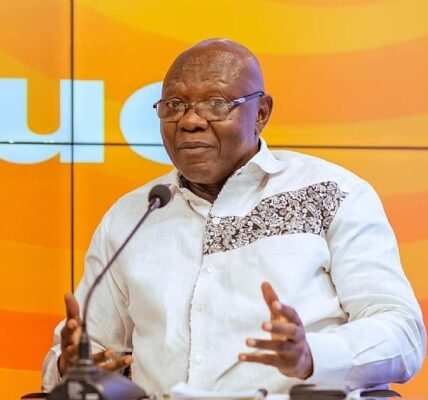
Speaking during a media engagement in Techiman, Richard Ellimah reaffirmed the committee’s determination to pursue the matter. The engagement formed part of PIAC’s tour of the Bono East Region, where officials assessed how petroleum revenues are being utilized in development projects. Ellimah stressed that PIAC would continue exploring all possible avenues to ensure the funds are fully accounted for in the interest of Ghanaians.
Legal action on the table
The frustration within the committee is mounting. Constantine Kudzedzi revealed that the funds have remained outstanding for more than five years.
He suggested that the matter may ultimately require legal interpretation, possibly by the Supreme Court of Ghana, to determine whether the funds qualify as petroleum revenue that must be paid into the Petroleum Holding Fund.
“It’s time we bring an end to this issue,” he emphasized, hinting at a potential court action to resolve the impasse.
Wider industry challenges
Beyond the revenue dispute, PIAC’s latest report highlights deeper structural concerns within Ghana’s oil and gas sector. The committee warned of declining crude oil production, which has dropped significantly—from 71.44 million barrels in 2019 to 37.3 million barrels in 2025. This marks the sixth consecutive year of decline. Additionally, financial constraints within the Ghana National Petroleum Corporation and reduced inflows from the TEN oil field have compounded the situation, raising fears about long-term sustainability.
Investor confidence at risk
PIAC cautioned that these issues could negatively impact investor confidence. With falling production and unresolved financial questions, the sector may become less attractive to potential investors. The committee also flagged persistent gas pricing disparities, likening them to the Discounted Industrial Development Tariff (DIDT), as another structural weakness needing urgent attention.
Key recommendations for reform
To address these concerns, PIAC has proposed several measures:
Develop a framework to boost investment in existing oil fields
Publish full details of major infrastructure projects, including the Accra–Kumasi expressway
Establish a long-term national development plan for petroleum revenue use
Introduce a time-bound debt repayment framework tied to the cash flow system
These recommendations aim to strengthen transparency, improve financial resilience, and ensure sustainable use of petroleum resources.
Media Applauds Transparency Efforts
The engagement was welcomed by Frederick Antwi, who praised PIAC for shedding light on how petroleum revenues are used.
He noted that many journalists were previously unaware of projects funded by these revenues and called for more frequent engagements to enhance public understanding and fact-based reporting.
A test of accountability
As pressure mounts on Explorco and the Ghana National Petroleum Corporation, the issue has become a critical test of accountability in Ghana’s extractive sector. For many observers, how this matter is resolved will not only determine the fate of the missing millions but also shape public trust in the management of the country’s natural resources.