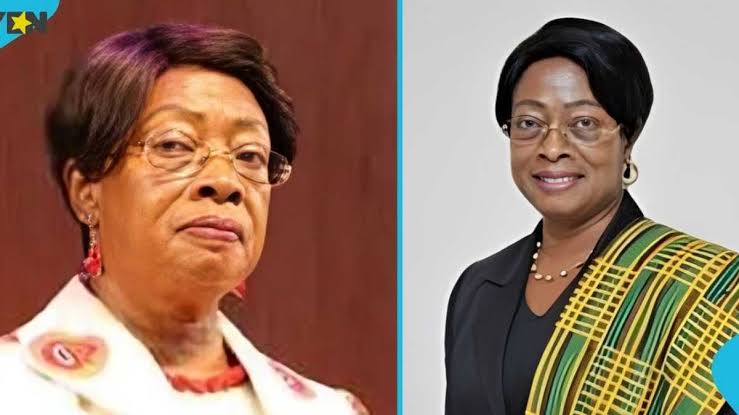

Mahama sued over failure to replace Ex-CJ on Council of State
A private citizen, Samuel Bryan Buabeng, has dragged President John Dramani Mahama before the Supreme Court over the failure to appoint a former Chief Justice to fill a vacant position on the Council of State.
The suit, filed against the Attorney-General, challenges what Mr Buabeng describes as a constitutional failure to replace retired Chief Justice Sophia Akuffo, who previously occupied an ex-officio position on the Council.
The case raises important questions about the constitutional composition of the Council of State and whether the President has a mandatory duty to fill a vacancy reserved specifically for a former Chief Justice.
Suit Invokes Supreme Court’s Original Jurisdiction
Mr Buabeng’s action invokes the Supreme Court’s original jurisdiction under Articles 2(1) and 130(1) of the 1992 Constitution, as well as Rule 45 of the Supreme Court Rules, 1996 (C.I. 16).
He is asking the apex court to determine whether the continued absence of a former Chief Justice from the Council amounts to a violation of the Constitution.
According to the suit, Articles 89(1) and 89(2)(a)(i) require the President to appoint another former Chief Justice when the person occupying the position resigns, becomes incapacitated or is removed from office.
Sophia Akuffo’s Resignation at the Centre of Dispute
The case follows the resignation of former Chief Justice Sophia Akuffo from the Council of State.
Justice Akuffo had occupied the ex-officio position reserved for a former Chief Justice under Article 89(2) of the Constitution. Her departure, Mr Buabeng argues, has created a vacancy that must be filled to ensure that the Council remains properly constituted.
He maintains that the constitutional provision does not merely permit the President to make a replacement but imposes an obligation on him to do so.
Plaintiff Seeks Deadline for Appointment
Mr Buabeng is asking the Supreme Court to declare unconstitutional any failure by President Mahama to fill the vacant position.
He is further seeking an order directing the President to consult Parliament within 14 days and subsequently appoint a former Chief Justice to the Council within a further 48 hours.
The plaintiff wants the court to clarify whether the President has discretion over whether to fill the position or whether the Constitution imposes a mandatory obligation once the office becomes vacant.
Resignation Comes Amid Questions Over Council Proceedings
The suit also touches on the circumstances surrounding Justice Akuffo’s resignation.
She had reportedly stopped attending meetings of the Council of State before eventually resigning from her position.
Her resignation followed her appearance as a witness in proceedings that culminated in the removal of then-Chief Justice Gertrude Torkornoo.
President Mahama signed the warrant for Justice Torkornoo’s removal on September 1, 2025.
Questions Over Confidentiality
Justice Akuffo’s participation in the proceedings subsequently prompted questions from some critics about whether her role was compatible with the confidentiality obligations associated with membership of the Council of State.
However, neither Justice Akuffo nor the Presidency has publicly provided an explanation for the circumstances surrounding her resignation.
The plaintiff’s case does not, however, depend solely on the circumstances of her departure. It principally seeks a constitutional determination on whether the vacancy created by her resignation must be filled.
Supreme Court Asked to Clarify Constitutional Duty
A key issue before the Supreme Court is whether the Council of State can remain constitutionally constituted when a specifically designated ex-officio position is vacant.
The court is also being asked to determine whether the constitutional provision guaranteeing representation for a former Chief Justice creates an enforceable obligation on the President to appoint a replacement.
The outcome could therefore provide an important interpretation of the constitutional provisions governing the Council of State and the President’s responsibilities in filling designated vacancies.
Matter Awaits Determination
The case is now before the Supreme Court for determination.
Its eventual ruling could settle whether the President is constitutionally required to promptly replace a former Chief Justice who vacates the Council of State position and, more broadly, clarify the extent of presidential discretion in maintaining the Council’s constitutionally prescribed composition.