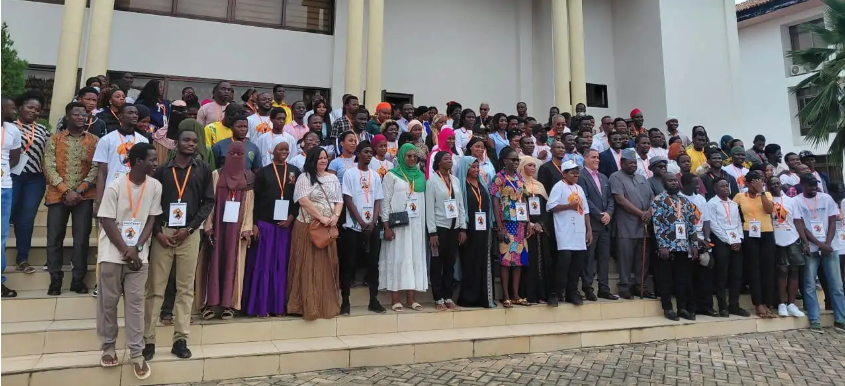

Young people from Ghana, Mali, Burkina Faso and Niger have adopted a declaration calling for greater African economic sovereignty, reparations for colonial injustices and the cancellation of what they describe as illegitimate debts imposed on African countries.
The demands were contained in the Legon Declaration, adopted on September 5, 2026, at the International Youth Forum, “Africa’s Freedom Is in Our Hands,” in Accra.
The delegates declared their intention to build a united youth movement to challenge what they described as continuing forms of neocolonial economic and political domination across the continent.
A major focus of the declaration was the CFA franc, which the youth described as a symbol of continued economic dependence.
“The CFA Franc is not a currency of convenience. It is a leash,” the declaration stated.
The delegates called for monetary sovereignty and argued that existing monetary arrangements limit the ability of African countries to independently determine their economic priorities.
They described monetary sovereignty as “the bare minimum of nationhood” and demanded reforms that would give African countries greater control over their financial systems.
The youth also called for an audit and cancellation of debts they consider illegitimate, arguing that their generation had inherited financial obligations it did not create.
“We are the generation that inherited a debt we did not create. We refuse that inheritance. We reclaim our future,” they stated.
The declaration expressed strong support for the Alliance of Sahel States (AES), comprising Mali, Burkina Faso and Niger.
The delegates said the three countries’ efforts to assert greater control over their resources, security, currency and national narratives offered lessons for young people across Africa.
“The Alliance of Sahel States is not a threat, it is a signal to all progressive Africa,” they stated.
The youth pledged to strengthen links between young people in Ghana and those in the AES countries, as well as similar movements across Africa and the diaspora.
They also demanded reparations for the historical exploitation of Africa, arguing that resources extracted from the continent helped build economies and institutions outside Africa.
“Reparations are not charity. They are justice deferred,” the declaration stated.
Beyond making demands, the delegates committed themselves to organising peaceful demonstrations, public campaigns and other lawful activities to raise awareness about what they described as continuing mechanisms of colonial era extraction.
They also pledged to establish a network of youth movements focused on African independence and to continue what they described as the unfinished work of Kwame Nkrumah.
The delegates said they would take the issues discussed at the forum to their campuses, communities and countries, particularly through education and public engagement.
They further committed themselves to holding African governments, institutions and themselves accountable for the commitments contained in the declaration.
The declaration ended with a pledge to transform the Accra gathering into a wider campaign.
“We leave this hall in Accra carrying more than a document. We carry a resolve,” the delegates stated.
They said their ultimate objective was to ensure that the Africa they inherited would not be the same Africa they hand over to future generations.