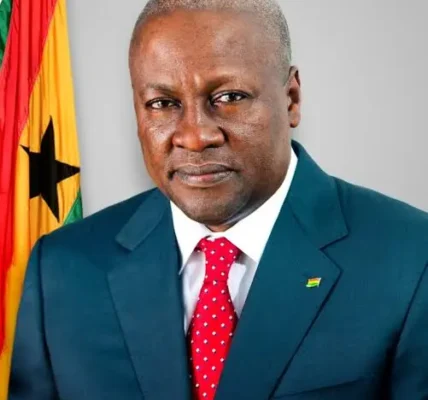

AG will grant OSP authorization upon request -Dr. Srem-Sai
Tensions have been quietly building between Ghana’s anti-corruption watchdog, the Office of the Special Prosecutor, and the Attorney-General’s Department. At the heart of the matter is a constitutional question: can the OSP prosecute cases on its own, or must it first obtain permission? The debate is rooted in 1992 Constitution of Ghana, which vests prosecutorial authority in the Attorney-General. While the OSP was created to operate independently, differing interpretations of the law have brought its autonomy into question.
Srem-Sai’s position
Deputy Attorney-General Justice Srem-Sai has stepped into the conversation with a conciliatory tone. Speaking publicly, he dismissed any notion of a power struggle between the two institutions. According to him, the Attorney-General’s office is not obstructing the OSP. Instead, it remains open to collaboration. He emphasized that if the OSP formally seeks approval, it would be granted without hesitation.
“Why not?” he argued, suggesting that cooperation—not conflict—should guide the relationship between the two bodies.
The core of the legal conflict
Despite this willingness, the disagreement runs deeper. The OSP maintains that its mandate allows it to initiate prosecutions without external approval. This stance is tied to the law that established it—Office of the Special Prosecutor Act, 2017 (Act 959).
On the other hand, the Attorney-General’s Department insists that constitutional provisions override statutory law, meaning any prosecutorial power must ultimately flow from the Attorney-General. This clash of interpretations has created a legal grey area, leaving both institutions operating under uncertainty.
High Court ruling sparks uncertainty
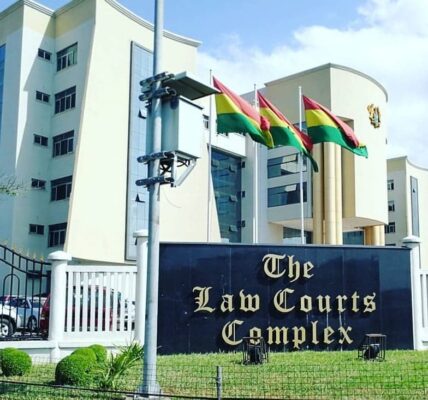
The situation escalated following a decision by an Accra High Court on April 15, 2026. The court ruled that the OSP cannot prosecute criminal cases independently unless authority is delegated by the Attorney-General.
The judgment further directed that all ongoing prosecutions handled by the OSP be transferred to the Attorney-General’s Department. This ruling has sent shockwaves through Ghana’s legal and anti-corruption landscape, potentially affecting multiple high-profile cases.
The case itself was initiated by Peter Achibold Hyde, whose legal challenge triggered the court’s interpretation.
A Parallel Battle at the Supreme Court
Even as the High Court ruling takes effect, a separate case is unfolding at the Supreme Court of Ghana. Filed by Noah Ephraem Tetteh Adamtey, the case questions the very legality of the law that established the OSP. The Supreme Court has already clarified that the Attorney-General is the appropriate party to defend the case. Legal experts believe the final ruling could have far-reaching consequences, potentially redefining—or even limiting—the OSP’s powers.
What lies ahead
For now, Ghana’s anti-corruption fight stands at a crossroads. While officials like Srem-Sai stress cooperation, the courts will ultimately determine the balance of power. If the judiciary affirms the need for Attorney-General oversight, the OSP may have to adjust its operations significantly. But if the courts uphold its independence, it could emerge stronger and more autonomous than before.
Either way, the outcome will shape not just institutional relationships, but also public confidence in Ghana’s ability to combat corruption effectively.