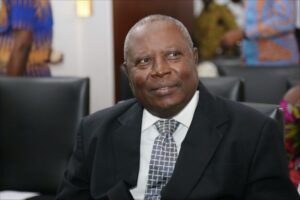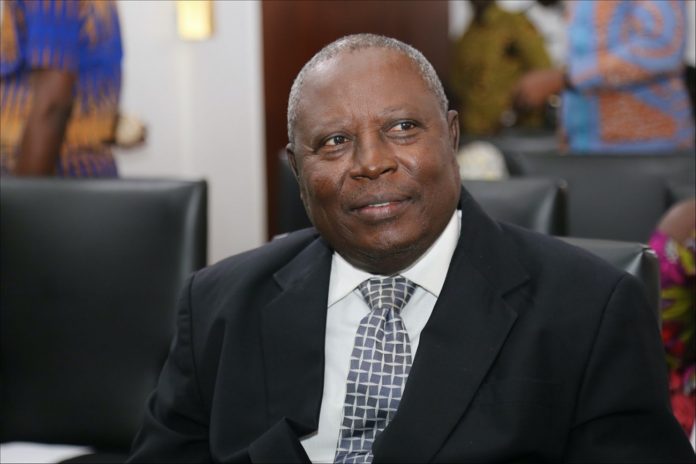

AG–OSP relationship “broken beyond repair” -Martin Amidu
A fracture at the heart of justice
In the middle of Ghana’s ongoing efforts to confront corruption, a deep institutional rift has come into sharp focus. Former Special Prosecutor Martin Amidu has issued a stark warning: the relationship between the Attorney-General (AG) and the Office of the Special Prosecutor (OSP) is “broken beyond repair.” His remarks were not made lightly. They came through a detailed legal analysis tied to a high-stakes constitutional battle—one that could redefine how Ghana prosecutes corruption cases.
Cracks in the legal foundation
At the core of Amidu’s concern is what he describes as inconsistency in the Attorney-General’s legal stance. According to him, contradictions in court filings—particularly regarding the constitutionality of the OSP’s powers—signal a lack of unified direction within the state’s legal machinery. In his view, this is more than a technical disagreement. It risks weakening the government’s credibility in court and undermining the very cases meant to hold corrupt actors accountable.
“The relationship… has broken down beyond repair,” he emphasized, suggesting that cooperation between the two offices has deteriorated to a point where effective collaboration may no longer be possible.
The Court ruling yhat changed everything
The tension intensified following a landmark ruling by the Accra High Court on April 15, 2026. The court declared that the OSP does not have the constitutional authority to prosecute criminal cases independently without authorization from the Attorney-General. Citing Article 88 of the 1992 Constitution, the court reaffirmed that prosecutorial power lies solely with the Attorney-General unless explicitly delegated. As a result, all ongoing cases handled by the OSP were ordered to be transferred to the Attorney-General’s Department. This decision effectively paused multiple corruption cases and cast uncertainty over the operational future of the OSP.
A legal battle with national implications
The ruling did not emerge in isolation. It followed a legal challenge by private citizen Peter Achibold Hyde and runs parallel to another constitutional case brought before the Supreme Court by Noah Ephraem Tetteh Adamtey.
That case questions the validity of the law establishing the OSP—arguing that Parliament overstepped by granting it independent prosecutorial authority. The focus is on whether such powers conflict with constitutional provisions that centralize prosecution under the Attorney-General. The Supreme Court has already clarified that the Attorney-General is the proper defendant in the matter, reinforcing the central role of that office in the unfolding legal drama.
Anti-corruption efforts at risk
For many observers, the dispute is not just about legal interpretation—it is about the future of Ghana’s anti-corruption framework. If the courts ultimately rule against the independence of the OSP, it could transform the agency into a body operating under the direct supervision of the Attorney-General. Critics worry this could dilute its effectiveness, especially in politically sensitive cases. Amidu’s warning highlights a broader concern: when key institutions tasked with fighting corruption are at odds, the entire system becomes vulnerable.
A nation watching closely
Beyond the courtroom, the issue resonates with broader national challenges—from governance to security concerns like the ongoing Bawku crisis, where public trust in institutions remains critical. Traditional leadership figures such as the Asantehene have often played stabilizing roles in times of national tension, underscoring the importance of cohesion across all levels of authority. In this context, the breakdown between the AG and OSP is more than an institutional dispute—it is a test of how well Ghana’s democratic structures can withstand internal strain.
The uncertain road ahead
As the Supreme Court prepares to deliver its judgment, the stakes could not be higher. The decision will not only determine the legal standing of the OSP but also shape the trajectory of anti-corruption efforts in Ghana for years to come. For now, one thing is clear: the fractures identified by Martin Amidu have opened a national conversation—one that forces Ghana to confront difficult questions about law, power, and accountability.