Ex-CJ Nana Abena Boafo Akuffo resigns from Council of State
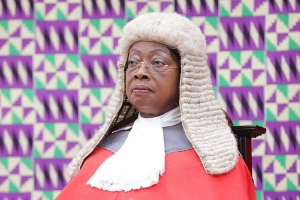
Former Chief Justice Nana Abena Boafo Akuffo, until her recent installation as Mmrahene of Akuapem was known as Sophia Akuffo, has resigned from Ghana’s Council of State, ending her tenure on the country’s highest presidential advisory body, according to sources familiar with the development.
The respected jurist, who served as Ghana’s 13th Chief Justice from 2017 to 2020, is understood to have tendered her resignation last year and has reportedly not attended any meetings of the Council since then. Neither Akuffo nor the Presidency has publicly commented on the resignation, and the reasons behind her decision remain undisclosed.
Departure from a Key Advisory Role
The Council of State is a constitutional body mandated to advise the President on matters of national importance. Its membership comprises elected and appointed representatives from across the country, offering guidance on governance and public policy issues.
Akuffo’s departure creates a vacancy on the influential body, although no official announcement has been made regarding a replacement.
Resignation Follows Judicial Controversy
Her resignation comes after a period of intense public scrutiny linked to one of Ghana’s most significant judicial controversies in recent years. In April 2025, the Council of State considered whether a prima facie case had been established against then Chief Justice Gertrude Torkornoo. Thirty of the Council’s 31 members voted in favour of proceeding with the matter, while Sophia Akuffo was the only member who abstained. No official explanation was provided for her decision at the time.
As events unfolded, Nana Abena Boafo Akuffo emerged as a vocal critic of the process that eventually led to Torkornoo’s removal from office.
Defence of Chief Justice Torkornoo
Akuffo voluntarily appeared before the Article 146 committee established to investigate the suspended Chief Justice after being invited by Torkornoo to testify in her defence. Her involvement attracted widespread attention because she was simultaneously serving as a member of the Council of State, the body that had participated in the process leading to the establishment of a prima facie case. Beyond her testimony, Akuffo publicly questioned the fairness and integrity of the proceedings.
Criticism of the Removal Process
In a September 2025 interview, Akuffo strongly criticised the process that resulted in Torkornoo’s removal.
She argued that the suspended Chief Justice had not been granted a fair hearing and described the proceedings as resembling a “treason trial.” According to her, the process weakened the judiciary and undermined public confidence in the administration of justice. Akuffo further maintained that the allegations against Torkornoo did not warrant the severe consequence of removing the head of the country’s judicial branch. Her comments quickly sparked national debate and drew criticism from legal and political figures.
Backlash and Calls for Action
Among her critics was Kwaku Ansa-Asare, former Director of the Ghana School of Law, who accused Akuffo of breaching her oath of secrecy as a member of the Council of State. He argued that her public remarks indirectly revealed knowledge of confidential deliberations. Political activist Solomon Owusu also announced plans to petition for her removal from the Council. He contended that Akuffo’s actions risked setting a dangerous precedent and questioned her decision to testify before the Pwamang-led committee while remaining a member of the Council of State. The controversy intensified after President John Dramani Mahama signed the warrant for Torkornoo’s removal on September 1, 2025.
A Distinguished Judicial Career
Despite the controversy surrounding her final years in public service, Nana Abena Boafo Akuffo remains one of Ghana’s most accomplished legal minds.
She served on the Supreme Court for more than two decades before becoming only the second woman in Ghana’s history to be appointed Chief Justice, following Justice Georgina Theodora Wood. Prior to her elevation to the country’s highest judicial office, she served as a judge of the African Court on Human and Peoples’ Rights and held several key positions within Ghana’s judiciary. Her contributions to legal development and judicial administration have earned her broad respect within Ghana and across the African legal community.
Public Advocacy Beyond the Bench
Akuffo also attracted public attention in 2023 when she joined pensioner groups protesting aspects of the government’s Domestic Debt Exchange Programme.
At the time, she argued that retired citizens should not be forced to shoulder a disproportionate burden of the country’s economic recovery efforts, positioning herself as a prominent voice in the debate over the treatment of pensioners.
Unanswered Questions Remain
With no official explanation for her resignation and no successor yet announced, questions remain about the circumstances that led to Akuffo’s departure from the Council of State.
What is clear, however, is that her exit marks the end of a notable chapter in Ghana’s public life—one shaped by decades of judicial service, principled advocacy, and, in its final phase, a highly contentious debate over judicial independence and accountability.