
Atewa Forest: Ghana’s butterfly haven and global biodiversity treasure
A Forest Where Butterflies Tell a Bigger Story
Deep in Ghana’s Eastern Region lies a forest reserve whose ecological significance reaches far beyond its lush green canopy. The Atewa Forest Range Reserve is home to an extraordinary concentration of butterfly species, rare plants, birds, amphibians and mammals, making it one of Ghana’s most important biodiversity landscapes.
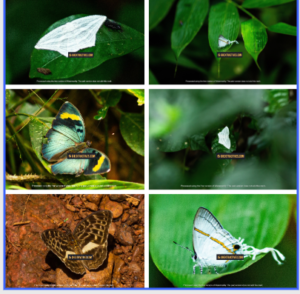
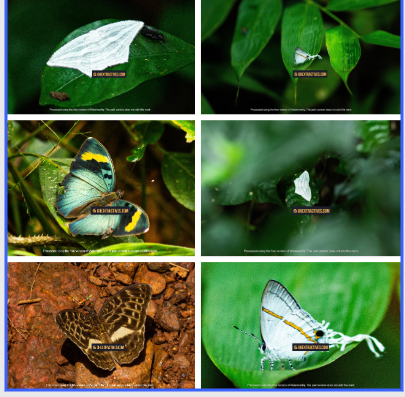
Reports indicate that about 70–77 percent of Ghana’s known butterfly species can be found in Atewa Forest. That remarkable concentration has placed the forest at the centre of efforts to conserve Ghana’s natural heritage and protect some of the country’s most threatened ecosystems.
But the butterflies of Atewa are more than beautiful creatures fluttering through the forest. They are also ecological messengers.
Scientists consider butterflies useful indicators of environmental health because they respond quickly to changes in habitat, climate and human disturbance. A forest supporting a wide variety of butterfly species is often evidence of a complex ecosystem capable of sustaining diverse plants and animals.
In Atewa, that diversity tells the story of a forest that remains exceptionally valuable — and exceptionally vulnerable.
Atewa’s Extraordinary Butterfly Diversity
For Dr. Seth Appiah Kubi, National Director of A Rocha Ghana, the importance of Atewa cannot be measured only by the water it provides to communities.
He points to another remarkable feature: the forest’s unusually high level of endemism, meaning the presence of species that are found nowhere else.
“On biodiversity, Atewa Forest is not only about water. I don’t know how the Creator did it, but this forest has been blessed with a very high level of endemism. This means that many species that cannot be found anywhere else are concentrated in this small area,” he said.
The forest’s butterfly population is one of the clearest demonstrations of that uniqueness.
According to Dr. Appiah Kubi, butterflies would normally be expected to occur across Ghana’s different ecological zones. Yet Atewa alone supports an extraordinary proportion of the country’s known species.
“If you look at butterflies in Ghana, they should naturally be distributed across different ecosystems. However, in Atewa Forest alone, about 77 percent of Ghana’s butterfly species can be found. This means only about 23 percent are found elsewhere in the country,” he said.
Such richness is one reason Atewa is recognized as a Key Biodiversity Area (KBA) — a globally important site whose protection is significant for conserving biodiversity.
A Forest of Rare Species
Atewa’s butterfly diversity is closely connected to the character of the forest itself.
Its upland evergreen forest, streams and varied habitats create a mosaic of ecological conditions capable of supporting a remarkable range of life. The landscape is also one of Ghana’s remaining areas of relatively intact upland evergreen forest.
For scientists and conservationists, this makes Atewa an important natural laboratory.
Butterflies can provide clues about what is happening within the wider ecosystem. Changes in butterfly abundance and distribution can help researchers understand the effects of deforestation, mining, climate change and other forms of environmental pressure.
When a butterfly species disappears from a forest, it may signal a deeper ecological problem — the loss of its food plants, breeding habitat or other conditions necessary for its survival.
Protecting the butterflies, therefore, means protecting the intricate relationships that allow the entire forest ecosystem to function.
More Than Just Butterflies
The ecological importance of Atewa extends well beyond its extraordinary butterfly population.
The forest is a critical watershed, feeding river systems and tributaries associated with the Birim, Densu and Ayensu rivers. These waterways support communities, agriculture, wildlife and ecosystems across parts of southern Ghana.
Dr. Appiah Kubi describes Atewa as part of a much larger forest heritage that has been dramatically reduced over time.
“Atewa is one of its kind. It is an upland forest and forms part of the Upper Guinean Forest, which once stretched from Senegal through to Côte d’Ivoire. Much of this forest ecosystem has been lost, and only about 5 percent remains in our region today. Atewa represents one of the largest remaining portions of this important forest system,” he said.
That history gives Atewa significance far beyond Ghana’s borders.
The Upper Guinean Forest once formed an extensive belt of tropical forest across West Africa. Much of it has been fragmented or destroyed by human activities. What remains, including Atewa, represents an increasingly precious refuge for species that have lost much of their former habitat.
A Refuge for Threatened Wildlife
Walk beneath Atewa’s canopy and the butterflies are only part of the story.
The forest provides habitat for threatened and rare species across multiple groups of wildlife, including plants, birds, amphibians and mammals. Its streams, forest floor, canopy and surrounding habitats form an interconnected web of life.
This interconnectedness is important.
The disappearance of one species can affect others that depend on it for food, pollination, seed dispersal or other ecological functions. In a forest as biologically rich as Atewa, the loss of habitat can therefore have consequences that extend far beyond a single plant or animal.
For conservationists, protecting Atewa means protecting this entire ecological network.
Butterflies Make the Case for Conservation
Butterflies are particularly vulnerable to changes in their surroundings because many species depend on specific plants and environmental conditions.
When forests are cleared or degraded, those specialised relationships can be disrupted. A butterfly may lose the plants on which its caterpillars feed, suitable places to reproduce or the microclimate it needs to survive.
This makes the protection of Atewa’s forest habitat essential.
Conservation groups argue that the extraordinary number of butterfly species found there provides a compelling reason to safeguard the forest from activities capable of degrading its ecological integrity.
The stakes are not limited to butterflies. The destruction of a biodiversity-rich landscape could mean the disappearance of species, habitats and ecological functions that cannot simply be recreated once lost.
“Atewa is a Key Biodiversity Area because of this unique richness. It makes you wonder why this place was created in such a special way, if not to protect the very foundation on which our lives depend. If we destroy it, we do so at our own peril,” Dr. Appiah Kubi stated.
The Threat Beyond the Canopy
Atewa faces the same pressures confronting many of Ghana’s remaining forests.
Land-use changes, illegal mining and other development pressures can fragment habitats, pollute waterways and alter the conditions on which wildlife depends.
For a forest that combines exceptional biodiversity with an important watershed function, such pressures carry multiple risks.
The degradation of the forest could simultaneously threaten wildlife, reduce the quality of water sources and weaken the ecological services that surrounding communities depend upon.
That is why conservationists insist that Atewa should be viewed not as an isolated patch of woodland, but as a living system whose value extends from the forest floor to the communities and rivers beyond its boundaries.
A Butterfly Haven with Eco-Tourism Potential
Atewa’s extraordinary biodiversity could also provide opportunities for sustainable economic development.
Across the world, butterfly watching attracts nature enthusiasts, photographers, researchers and tourists seeking close encounters with wildlife. With careful management, Atewa’s butterfly diversity could become an important component of Ghana’s ecotourism offering.
Such tourism could create opportunities for communities around the forest through guiding, accommodation, transport, handicrafts, conservation education and other services.
The principle is simple: a forest can generate economic value without being destroyed.
For Atewa, ecotourism could help turn its extraordinary biodiversity into an incentive for long-term protection while creating livelihoods for people living around the reserve.
Why Atewa Matters to Ghana
Ghana is under increasing pressure to balance development needs with the protection of its remaining natural ecosystems.
Atewa presents that challenge in particularly sharp form.
One forest contains an extraordinary proportion of Ghana’s butterfly species. It supports rare and threatened wildlife. It forms part of one of West Africa’s most diminished forest ecosystems. It helps sustain important water systems. And it offers opportunities for scientific research, environmental education and ecotourism.
Losing such a landscape would therefore mean losing much more than trees.
It could mean losing species found nowhere else, weakening ecosystems that communities depend on and erasing opportunities for future generations to study and experience Ghana’s natural heritage.
“Why Atewa? Because there is so much to lose if we allow such an important biodiversity area to disappear,” Dr. Appiah Kubi said.
Make Atewa a National Park
The call to Make Atewa a National Park is ultimately a call to give one of Ghana’s most important natural landscapes the strongest possible protection.
Atewa’s butterflies offer a vivid way of understanding what is at stake. Their extraordinary diversity is evidence of an ecosystem that has retained a remarkable degree of ecological complexity.
But the butterfly is only one thread in the larger story.
Behind every butterfly is a plant. Behind the plant is a habitat. Behind the habitat is a forest. And behind the forest are rivers, communities, wildlife and ecological processes that sustain life.
Protecting Atewa means protecting all of these connections.
Ghana’s butterfly haven is therefore much more than a destination for nature lovers. It is a living archive of West Africa’s natural history, a refuge for rare species and a vital part of the country’s environmental future.
Make Atewa a National Park.
Make Atewa a National Park.
Make Atewa a National Park.
About the Nature’s Heartbeat Project
This story is produced under the Nature’s Heartbeat Project, a global conservation initiative led by IUCN Netherlands with backing from the Dutch Postcode Lottery.
Spanning Ghana, Bolivia, Indonesia, Uganda and the Philippines, the 2025–2029 programme supports local grassroots conservation through flexible, trust-based funding and capacity building.
In Ghana, the initiative is spearheaded by A Rocha Ghana, with a focus on the Atewa Range Forest Reserve and Mole National Park.