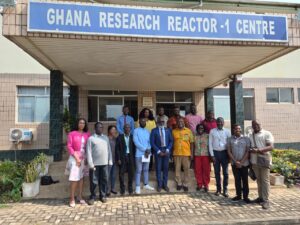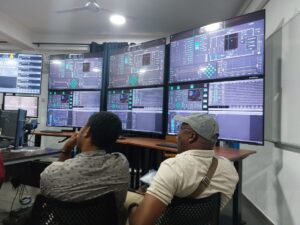
Media practitioners equipped with nuclear energy knowledge at E2 Simulation Centre

Media practitioners equipped with nuclear energy knowledge at E2 Simulation Centre
Nuclear Energy Media Tour Deepens Understanding
Media practitioners have gained deeper insight into Ghana’s nuclear energy programme and the management of radioactive materials following an educational tour of key facilities at the Ghana Atomic Energy Commission (GAEC) in Accra.
The tour, organised by Nuclear Power Ghana on August 18, 2026, took journalists to the E2 Simulation Centre at Atomic-Kwabenya and other nuclear-related facilities, where experts explained how nuclear technology is applied in healthcare, industry, agriculture, mining, construction, research and electricity generation.
The programme was designed to equip the media with technical knowledge to enable accurate and informed reporting on nuclear science, safety and Ghana’s preparations for nuclear power.
Radioactive Waste Management From Generation to Disposal
Speaking during the tour, Dr. Gustav Kudjoe Gbeddy, Research Scientist at the Radioactive Waste Management Centre of GAEC, explained that his team is responsible for managing radioactive waste generated in the country.
He said generators of radioactive waste have two main options. Where possible, radioactive materials can be returned to the supplier or country of origin. Where that is not feasible, the waste is transferred to GAEC through the Nuclear Regulatory Authority for proper management.
According to Dr. Gbeddy, the waste is managed from the point of acceptance through its eventual disposal, with strict procedures applied to prevent harm to people and the environment.
He noted that a significant proportion of the radioactive waste received at the facility comes from hospitals, including materials associated with cancer treatment and nuclear medicine.
Radioactive Materials in Everyday Industries
Dr. Gbeddy also demonstrated how radioactive materials are used in several industries, many of which directly affect everyday life.
He explained that radioactive sources are used in process and quality control, including checking the levels of beverages in bottles to ensure that products are filled uniformly.
The technology is also applied in road construction, where radioactive devices help engineers determine moisture content and the density of compacted roads.
In the mining industry, radioactive sources are used to determine the density and characteristics of ore during processing.
Another important application is non-destructive testing in the oil and gas industry. Dr. Gbeddy explained that radioactive sources can be used to inspect welded structures, such as underground fuel tanks, to identify defects or possible leaks without destroying the structures being tested.
He said once such radioactive sources are no longer useful and cannot be returned to their suppliers, they are transferred to the appropriate facility for safe management.
Long-Term Responsibility to Future Generations
A major theme of the presentation was the need to manage radioactive waste responsibly because some radioactive materials can remain hazardous for very long periods.
Dr. Gbeddy said radioactive waste management must not create problems for future generations. He explained that some materials can have lifespans extending to thousands of years, making proper containment and isolation essential.
The waste management process includes segregation, removal of radioactive components from equipment, measurement of radioactivity and placement of the materials in specially designed containers.
He explained that radioactive sources are placed in capsules and subsequently secured in concrete containers to provide both containment and shielding.
According to him, the long-term objective is to develop disposal systems that can isolate radioactive materials from groundwater and the wider environment.
He said site investigations, environmental impact assessments, safety assessments and regulatory reviews form part of the process before a final disposal facility can be approved.
Nuclear Technology and Scientific Research
The journalists also visited Reactor Hall 1, where Dr. Kwame Gyamfi, Research Scientist, explained how nuclear techniques are used to identify and quantify elements in different materials.
He said the technology can be applied to samples including food, water, soil, rocks and other materials.
Dr. Gyamfi explained that identifying the elements and their concentrations can provide useful information for mining, healthcare, agriculture, metallurgy and food research.
Using food as an example, he said researchers can determine the elements and nutrients contained in different food products, helping consumers, regulators and producers make informed decisions.
Radiation Used to Analyse Food and Other Samples
Dr. Gyamfi demonstrated how samples are prepared for analysis. Solid materials such as rocks and soil are crushed into powder, while very small quantities are measured for testing.
He explained that a single sample can provide information about numerous elements rather than requiring separate samples for each element.
The samples can be placed in irradiation capsules and exposed to neutron radiation in the reactor. The process makes the samples radioactive, allowing scientists to measure the gamma radiation they subsequently emit.
Using a high-purity germanium detector, scientists can identify different elements from their characteristic gamma-ray energies.
Dr. Gyamfi said the resulting spectrum contains different peaks, with each peak corresponding to a particular element. Scientists can then use physics and mathematical calculations to determine the concentration of the elements in the sample.
Supporting Food and Product Regulation
The research also supports regulatory institutions in determining whether products meet required standards.
Dr. Gyamfi said samples submitted for analysis can be examined for nutrients, harmful substances and other elements. Where harmful substances such as arsenic are detected in food, the scientific findings can support regulatory action.
He described GAEC’s scientific laboratories as technical support for regulatory authorities, including institutions responsible for food safety and product approval.
Understanding How a Nuclear Reactor Works
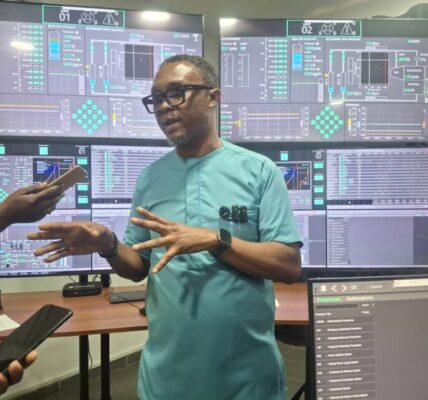
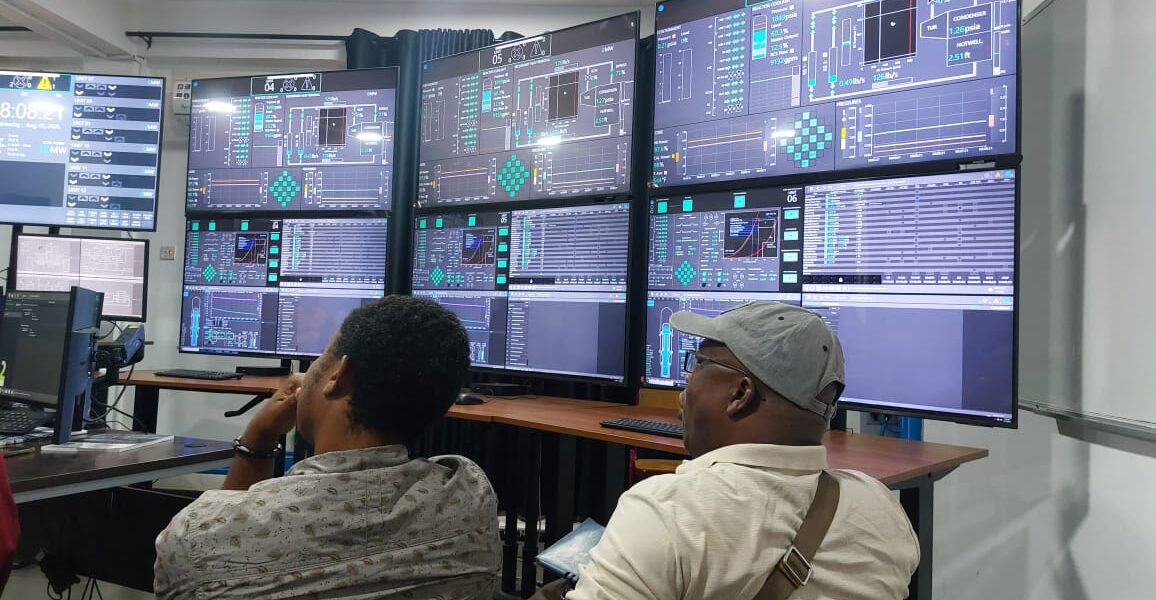
At the Nuclear Power Institute’s facilities, George Kofi Appiah, Manager for Localization and Stakeholder Support Centre, introduced journalists to the operation of nuclear reactors through a simulator.
He explained the arrangement of fuel assemblies, fuel rods and control rods inside a reactor.
According to him, nuclear fission produces neutrons that can trigger further fission, creating a chain reaction. Control rods are designed to absorb neutrons and therefore regulate the reaction.
When the control rods are inserted further into the reactor, more neutrons are absorbed, slowing or stopping the chain reaction.
The simulator allowed the journalists to observe reactor conditions, including power, temperature and pressure, while gaining a practical understanding of how operators monitor nuclear facilities.
Small Modular Reactors Offer Flexibility
Mr. Appiah also explained the potential advantages of small modular reactor technology.
He said modular reactors can be installed progressively rather than requiring an entire large nuclear power plant to be completed before electricity generation begins.
He explained that the modular approach can also provide flexibility during maintenance. Instead of shutting down an entire large plant for maintenance, individual modules can be taken offline while the others continue generating electricity.
This, he said, can help reduce the amount of generating capacity removed from the national grid during maintenance.
Passive Safety Systems
One of the most significant demonstrations at the simulation centre focused on passive safety systems.
Mr. Appiah explained that passive safety systems are designed to rely on natural forces, such as gravity, rather than requiring continuous intervention by operators or external electricity.
He used control rods as an example. In an emergency such as an earthquake, sensors can detect the disturbance and cause the mechanism holding the control rods to release them. Gravity then causes the rods to drop into the reactor, absorbing neutrons and helping to shut down the chain reaction.
Similar principles apply to some valves. Where electricity is required to hold a valve in a particular position, a loss of power can cause the valve to return automatically to its safe position.
Reactor Response During an Emergency
The journalists witnessed a simulation of an earthquake scenario and observed how the reactor would respond.
Mr. Appiah explained that in the simulated event, the reactor automatically moves into a safe condition without requiring an operator to intervene immediately.
He said passive cooling mechanisms can continue removing residual heat from the reactor even after normal power-dependent systems are unavailable.
According to him, the design provides significant time for operators and emergency teams to respond, while natural processes continue helping to cool the reactor.
The demonstration was intended to show that nuclear safety is not based solely on human intervention but also incorporates multiple layers of engineered protection.
Building Public Understanding Through the Media
The tour underscored the important role of journalists in communicating nuclear science to the public.
The presentations demonstrated that nuclear technology extends beyond electricity generation, with applications in medicine, food safety, mining, road construction, industry, scientific research and environmental protection.
The experts also emphasised that radioactive materials require specialised management throughout their lifecycle, from use to storage and eventual disposal.
For the media practitioners, the exposure provided an opportunity to move beyond common perceptions of nuclear technology and gain first-hand knowledge of how radioactive materials are used, monitored and managed.
The tour also highlighted Ghana’s efforts to build the technical, scientific and regulatory capacity needed to safely expand its use of nuclear technology.
As Ghana advances discussions on nuclear power, the knowledge gained by journalists is expected to contribute to more accurate, balanced and responsible public reporting on nuclear energy, safety and its potential contribution to the country’s development.
Source: African Editors