
Global InfoAnalytics Poll puts Mahama’s approval rating at 71%
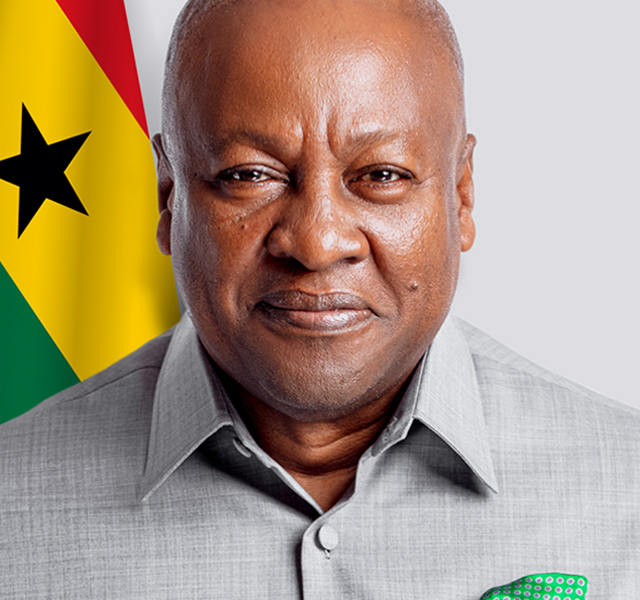
President John Dramani Mahama has recorded a 71% job approval rating, the highest score achieved by any sitting Ghanaian president in Global InfoAnalytics’ regular tracking polls since 2020. The latest findings, released on Sunday, June 15, are contained in the June 2026 National Tracking Poll conducted by Global InfoAnalytics. The survey shows a four-percentage-point increase in the President’s approval rating from the 67% recorded in March 2026. Only 23% of respondents expressed disapproval of the President’s performance, while 6% said they had no opinion.
Majority believe Ghana is heading in the rightght direction
The poll indicates that public confidence in the country’s direction remains strong. About 66% of respondents said Ghana is moving in the right direction, compared to 27% who believe the country is on the wrong path. These figures remain largely unchanged from the March survey, suggesting sustained optimism among the population.
Strong regional support across the country
President Mahama’s approval ratings were broadly positive across most regions, with some areas recording particularly high levels of support.
The Savannah Region topped the list with an approval rating of 86%, followed by the Western North Region with 82%. The Western Region registered 76%, Greater Accra 73%, and the Central Region 70%. However, some regions recorded lower approval levels. The Ahafo Region posted the lowest rating at 40%, while the North East Region recorded 52% and the Ashanti Region 55%.
Sharp political divide emerges
The survey revealed significant differences in opinion along political lines. Among supporters of the National Democratic Congress (NDC), an overwhelming 91% approved of the President’s performance, while only 6% disapproved. In contrast, approval among New Patriotic Party (NPP) sympathisers stood at 37%, with 54% expressing dissatisfaction. Independent or floating voters also gave the President relatively strong ratings, with approval levels ranging between 59% and 65%, while disapproval ranged from 22% to 30%.
Government performance receives positive reviews
Beyond the President’s personal approval rating, respondents also gave favourable assessments of the government’s overall performance.
According to the poll, 47% rated the government’s work as either “very good” or “good,” while an additional 22% described performance as “excellent.”
Only 13% of respondents considered the government’s performance to be poor or very poor.
Living standards show signs of improvement
The survey suggests that many Ghanaians are experiencing improvements in their personal economic circumstances. A majority of 57% said their standard of living has improved compared to a year ago. Meanwhile, 23% reported no change, while 16% said their living conditions had worsened. Looking ahead, optimism remains high, with 68% expecting their standard of living to improve over the next 12 months.
Unemployment, economy and dumsor remain key concerns
Despite the generally positive outlook, respondents identified several areas where they believe the government is underperforming. Unemployment emerged as the top concern, cited by 44% of respondents. This was followed by concerns about the general economy at 32% and persistent power supply challenges, commonly known as dumsor, at 29%. These issues continue to represent significant challenges for the administration despite its overall popularity.
Public perception of corruption improving
The poll also found growing confidence in the fight against corruption.
More than half of respondents (54%) said corruption in Ghana has improved, while 21% believed the situation has worsened. When asked which institution is best positioned to tackle corruption, 36% said both the Attorney General’s Department and the Office of the Special Prosecutor are equally capable. Among those who preferred a single institution, 24% favoured the Attorney General, while 16% chose the Office of the Special Prosecutor.
Support for tough measures against exam malpractice
Ghanaians also expressed support for stronger measures to combat examination malpractice.
The survey found that 67% favour the publication of photographs of adults caught cheating in examinations as a deterrent. Only 13% opposed the proposal. On school discipline, opinions were divided. About 38% supported the reintroduction of corporal punishment, while 27% preferred suspension as a disciplinary measure. Another 20% backed community service.
Growing demand for younger political leadership
A majority of respondents indicated a preference for younger leaders to guide Ghana’s future. According to the poll, 57% want the country to be led by younger people, while 26% disagreed.
Support for younger leadership was strongest in the Savannah Region, where 89% endorsed the idea, followed by the Upper West Region with 82%. However, majorities in regions such as Ashanti, Bono and Western North were less supportive of the view. When asked what age they considered too old to lead the country, 46% set the threshold at 65 years and above. Another 17% preferred an age limit between 50 and 54 years, while 21% said age should not matter in determining leadership suitability.
Poll methodology
The June 2026 National Tracking Poll was conducted between May 30 and June 12, 2026. A total of 8,784 voters were sampled across all 16 regions and 84 constituencies. Of these, 7,484 respondents participated through face-to-face interviews, while 1,302 were reached through online and web-based responses. Global InfoAnalytics reported that the survey carries a 99% confidence level and a margin of error of plus or minus 2.5%.
The findings suggest that President Mahama continues to enjoy significant public support nationwide, even as concerns over unemployment, economic conditions and power supply remain prominent among Ghanaians.